


How can we help?
Let's Talk
How can we help?
Let's Talk
Security and compliance are major considerations when an organization outsources the ongoing management of its data and AI systems.
A managed services provider may work with production environments, sensitive data, cloud infrastructure, applications, APIs, and other business-critical systems. Organizations therefore need clear controls around access, monitoring, privacy, infrastructure security, incident response, and responsibility.
The specific controls required depend on the organization’s systems, data, industry, and regulatory obligations.
How Do Managed Data & AI Services Address Security?
Security should be built into the operational model rather than treated as a separate activity. Key areas include access management, monitoring, infrastructure protection, data handling, and incident response.
1. Data Access and Permissions
Managed providers may need access to systems to monitor, maintain, and troubleshoot them.
Organizations should establish:
- Least-privilege access
- Role-based permissions
- Controlled administrative access
- Authentication requirements
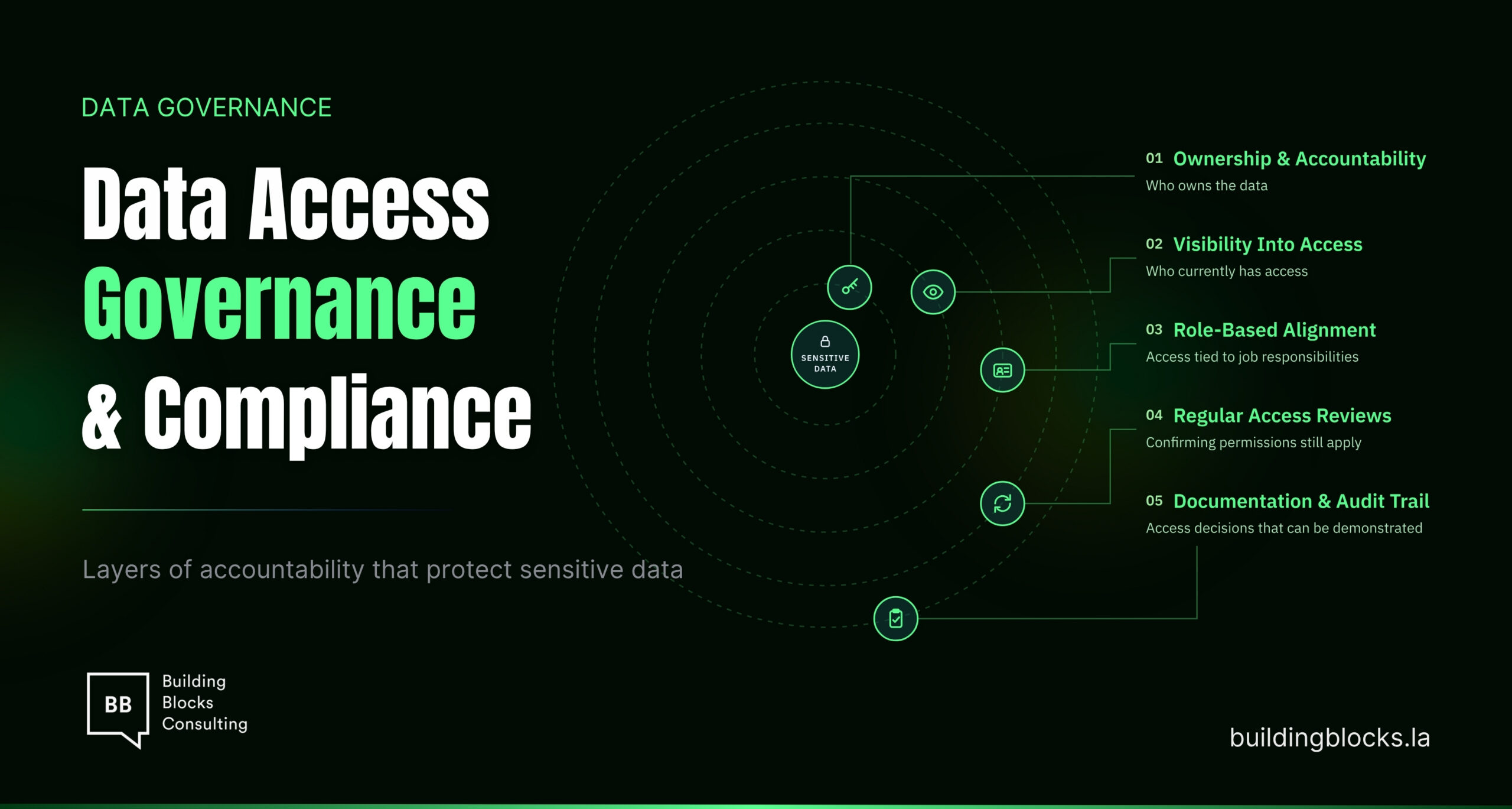
- Regular access reviews
- Clear procedures for removing access
Providers should only receive the access required to perform their responsibilities.
2. Identity and Credential Management
Credentials used to access production systems should be managed carefully.
Organizations should understand how a provider handles:
- User identities
- Administrative accounts
- Authentication
- Service accounts
- API credentials
- Credential rotation
- Privileged access
Clear ownership and access procedures can reduce unnecessary security exposure.
3. Monitoring and Logging
Operational monitoring can also support security by helping identify unusual activity, system changes, access issues, and operational incidents.
Depending on the environment, monitoring may cover:
- System activity
- Application behavior
- Infrastructure
- APIs and integrations
- Access events
- Operational incidents
Logs should be handled according to the organization’s security, privacy, and retention requirements.
4. Encryption and Data Protection
Organizations should understand how sensitive information is protected while stored and transmitted.
Security discussions with a managed services provider should address applicable encryption practices, data handling procedures, storage environments, and access controls.
The appropriate approach depends on the type of data and the organization’s requirements.
5. Infrastructure Security
Managed data and AI environments may rely on cloud platforms, databases, data warehouses, compute resources, networking, and other infrastructure.
Security responsibilities should be clearly defined across the environment.
Organizations should understand:
- Which infrastructure the provider manages
- Which infrastructure remains under the client’s control
- How access is controlled
- How systems are monitored
- How security incidents are handled
This is especially important in cloud environments where responsibilities may be shared among the cloud provider, managed services provider, and client.
How Do Managed Data & AI Services Support Compliance?
Compliance is not simply a feature that a managed services provider can guarantee for every organization.
Requirements depend on the organization’s industry, location, data types, business processes, and applicable regulations.
A provider can support compliance-related operational requirements through appropriate access controls, monitoring, documentation, security processes, and incident procedures.
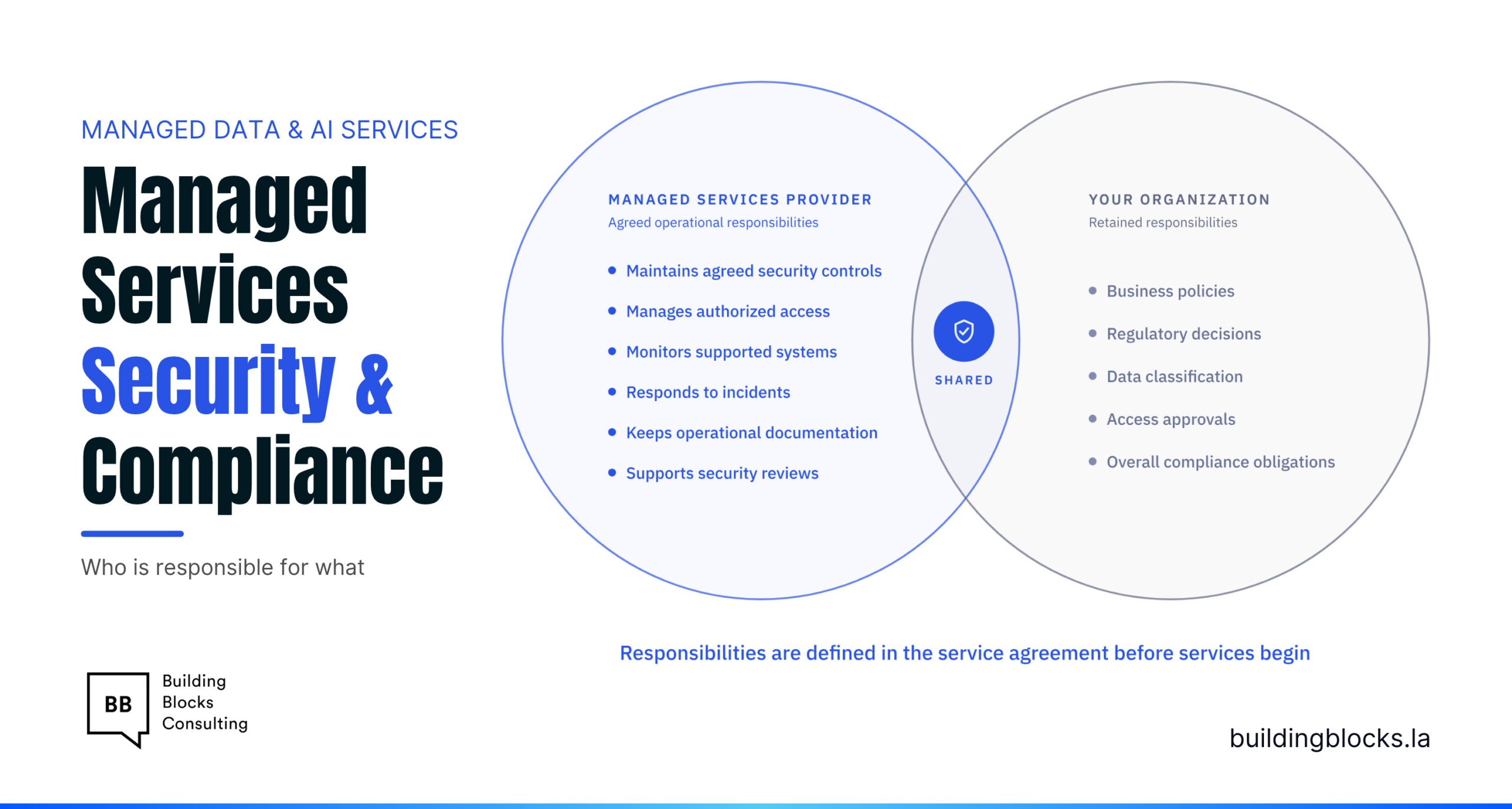
However, the organization should clearly establish which compliance responsibilities belong to the client and which are delegated to the provider.
What Are the Compliance Responsibilities of a Managed Services Provider?
Responsibilities should be defined in the service agreement and supporting documentation.
Depending on the engagement, the provider may be responsible for operational activities such as:
- Maintaining agreed security controls
- Managing authorized access
- Monitoring supported systems
- Responding to operational or security incidents
- Maintaining relevant operational documentation
- Supporting security reviews
The client may retain responsibility for areas such as business policies, regulatory decisions, data classification, access approvals, and overall compliance obligations.
The exact division of responsibility should be established before services begin.
How Should Businesses Evaluate a Provider's Security Practices?
Before selecting a managed data and AI services provider, ask:
- What access will you require?
- How is privileged access controlled?
- How are credentials managed?
- What systems and activities are monitored?
- How are security incidents escalated?
- How is sensitive data handled?
- What security responsibilities remain with our organization?
- How do you support our compliance requirements?
- What security documentation can you provide?
- How are access permissions reviewed and removed?
The provider should be able to explain its security practices clearly and relate them to the systems it will actually manage.
Managed Services vs. Data Governance
Managed Data & AI Services and data governance address different needs.
Managed services focus on the ongoing technical operation of data and AI environments, including monitoring, maintenance, troubleshooting, integrations, and performance optimization.
Data governance focuses on how an organization establishes ownership, standards, policies, controls, data quality practices, access rules, and accountability for its data.
There can be interaction between the two, particularly around access and security, but they serve different purposes.
Organizations should therefore evaluate operational security within their managed services engagement while addressing broader governance requirements through an appropriate governance framework.
What Happens When a Security Incident Occurs?
A managed services engagement should establish a clear incident-response process before an incident happens.
This should define:
- How incidents are detected
- Who is notified
- How incidents are prioritized
- Who investigates the issue
- How escalation works
- What information is documented
- Which party is responsible for specific actions
Clear procedures can help reduce confusion when a security or operational incident affects production systems.
Key Takeaways
When evaluating managed data and AI services, security should be considered alongside technical expertise and service coverage.
Organizations should look for:
- Controlled and least-privilege access
- Strong identity and credential management
- Appropriate monitoring and logging
- Data protection measures
- Secure infrastructure practices
- Clear incident-response procedures
- Defined compliance responsibilities
- Transparent provider and client responsibilities
The goal is not simply to outsource operational work. It is to establish a managed operating model in which security responsibilities are clearly understood and appropriately controlled.



By Chris Clifford
Chris Clifford was born and raised in San Diego, CA and studied at Loyola Marymount University with a major in Entrepreneurship, International Business and Business Law. Chris founded his first venture-backed technology startup over a decade ago and has gone on to co-found, advise and angel invest in a number of venture-backed software businesses. Chris is the CSO of Building Blocks where he works with clients across various sectors to develop and refine digital and technology strategy.