


How can we help?
Let's Talk
How can we help?
Let's Talk
Why the most successful companies in the next decade will build hybrid teams of people and intelligent machines.
For years, the conversation around artificial intelligence has been dominated by a single question:
Will AI replace human jobs?
From automation in manufacturing to intelligent software in offices, many fear a future where machines gradually replace human workers. But the reality unfolding inside forward-thinking companies tells a different story.
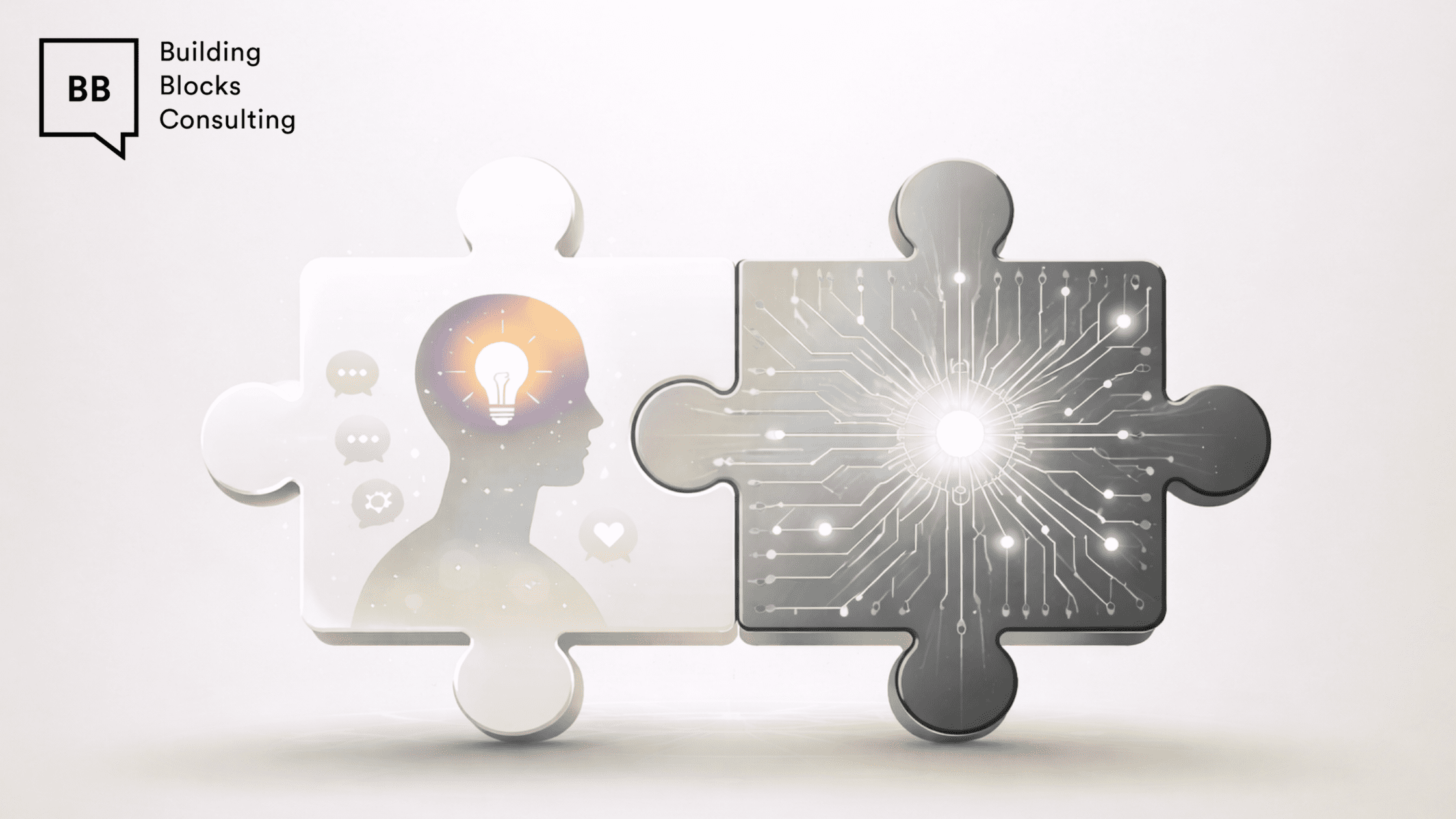
The future of work is not about AI replacing humans.
Instead, it’s about AI amplifying human potential.
Organizations that understand how to combine human intelligence with artificial intelligence will outperform those that rely on either one alone. The next era of productivity will be defined by collaboration between humans and AI systems.
1. The Evolution of Work in the Age of AI
Every major technological shift has transformed how people work. The industrial revolution mechanized physical labor. The internet revolutionized information sharing.
Now, artificial intelligence is reshaping how decisions are made, problems are solved, and businesses operate.
Unlike previous technologies, AI can process massive amounts of information, generate insights, and automate complex tasks. But while its capabilities are impressive, it still lacks the deeper human abilities that drive innovation and leadership.
This is why the future of work will not be purely automated, it will be augmented.
2. From Automation to Augmentation
Traditional automation focused on replacing repetitive tasks. AI takes this concept further by assisting professionals in areas that previously required significant time and effort.
For example:
- Developers use AI tools to write and debug code faster
- Marketers use AI to analyze customer behavior and campaign performance
- Analysts use AI to uncover patterns hidden in large datasets
In these situations, AI does not replace the professional. Instead, it acts as a powerful assistant, allowing individuals to focus on strategy, creativity, and decision-making.
The result is not fewer jobs, but more productive teams.
3. Why AI Alone Cannot Run the Workplace
Despite rapid progress in machine learning and automation, AI still has limitations that prevent it from fully replacing human workers.
Artificial intelligence struggles with:
- Understanding complex social dynamics
- Applying ethical judgment
- Navigating ambiguity
- Making creative leaps
Human beings bring context, empathy, and intuition to the workplace qualities that machines cannot replicate.
The strongest organizations recognize that AI handles speed and scale, while humans provide judgment and leadership.
4. The Rise of Hybrid Human-AI Teams
A growing number of companies are now building hybrid teams where employees collaborate with AI systems.
These teams operate differently from traditional workplaces. Instead of relying solely on human effort, they combine human expertise with AI-driven insights.
Examples include:
- Customer service teams using AI assistants to resolve issues faster
- Product teams using AI to analyze user feedback and prioritize features
- Finance departments using AI to detect risks and forecast trends
When humans and AI work together, businesses can operate faster while still maintaining strategic oversight.
5. AI Agents Are Becoming Digital Teammates
One of the most exciting developments in the AI landscape is the rise of AI agents.
Unlike traditional software tools, AI agents can perform tasks autonomously, interact with digital systems, and support employees in completing complex workflows.
They can help teams by:
- Researching information quickly
- Drafting documents and reports
- Automating repetitive operations
- Organizing and summarizing data
However, even advanced AI agents require human guidance to ensure that outputs align with business goals.
Rather than replacing employees, these agents are becoming digital teammates that enhance human productivity.
6. Companies Must Redesign How Work Happens
Integrating AI into an organization requires more than simply adopting new tools. Companies must rethink how work is structured.
Workflows designed for human-only teams often fail to take advantage of AI’s capabilities. To fully benefit from AI, businesses need to redesign processes so that humans and machines collaborate effectively.
This includes:
- Training employees to work with AI systems
- Redesigning workflows around AI-powered insights
- Creating roles focused on managing and optimizing AI tools
Organizations that successfully adapt their processes will unlock enormous productivity gains.
7. The Skills That Will Define the Future Workforce
As AI becomes more integrated into professional environments, the skills that matter most are evolving.
Technical expertise will remain important, but human-centered capabilities will become even more valuable.
Future professionals will need:
- Critical thinking
- Creativity
- Strategic decision-making
- Leadership and communication
- Ethical judgment
These skills allow people to guide AI systems, interpret results, and make meaningful decisions.
In a world powered by intelligent machines, human insight becomes the differentiating factor.
8. How Businesses Can Prepare for the Future
Companies that want to stay competitive must start preparing today.
This preparation includes:
- Investing in AI literacy across the workforce
- Encouraging experimentation with AI-powered tools
- Building teams that combine technical and strategic expertise
Organizations that move early will develop the experience needed to integrate AI successfully into their operations.
At BuildingBlocks, we believe the future belongs to companies that learn how to combine human creativity with artificial intelligence. Technology alone cannot drive transformation it is the people behind it who create meaningful progress.
Conclusion
The future of work is not a battle between humans and machines.
It is a partnership.
Artificial intelligence will continue to automate tasks, analyze data, and accelerate productivity. But the most important decisions, innovations, and breakthroughs will still come from people.
Companies that embrace this collaborative model will build stronger teams, create better products, and adapt faster to change.
Because the real future of work is not AI versus humans.
It is AI and humans working together to build what comes next.


By Chris Clifford
Chris Clifford was born and raised in San Diego, CA and studied at Loyola Marymount University with a major in Entrepreneurship, International Business and Business Law. Chris founded his first venture-backed technology startup over a decade ago and has gone on to co-found, advise and angel invest in a number of venture-backed software businesses. Chris is the CSO of Building Blocks where he works with clients across various sectors to develop and refine digital and technology strategy.