


How can we help?
Let's Talk
How can we help?
Let's Talk
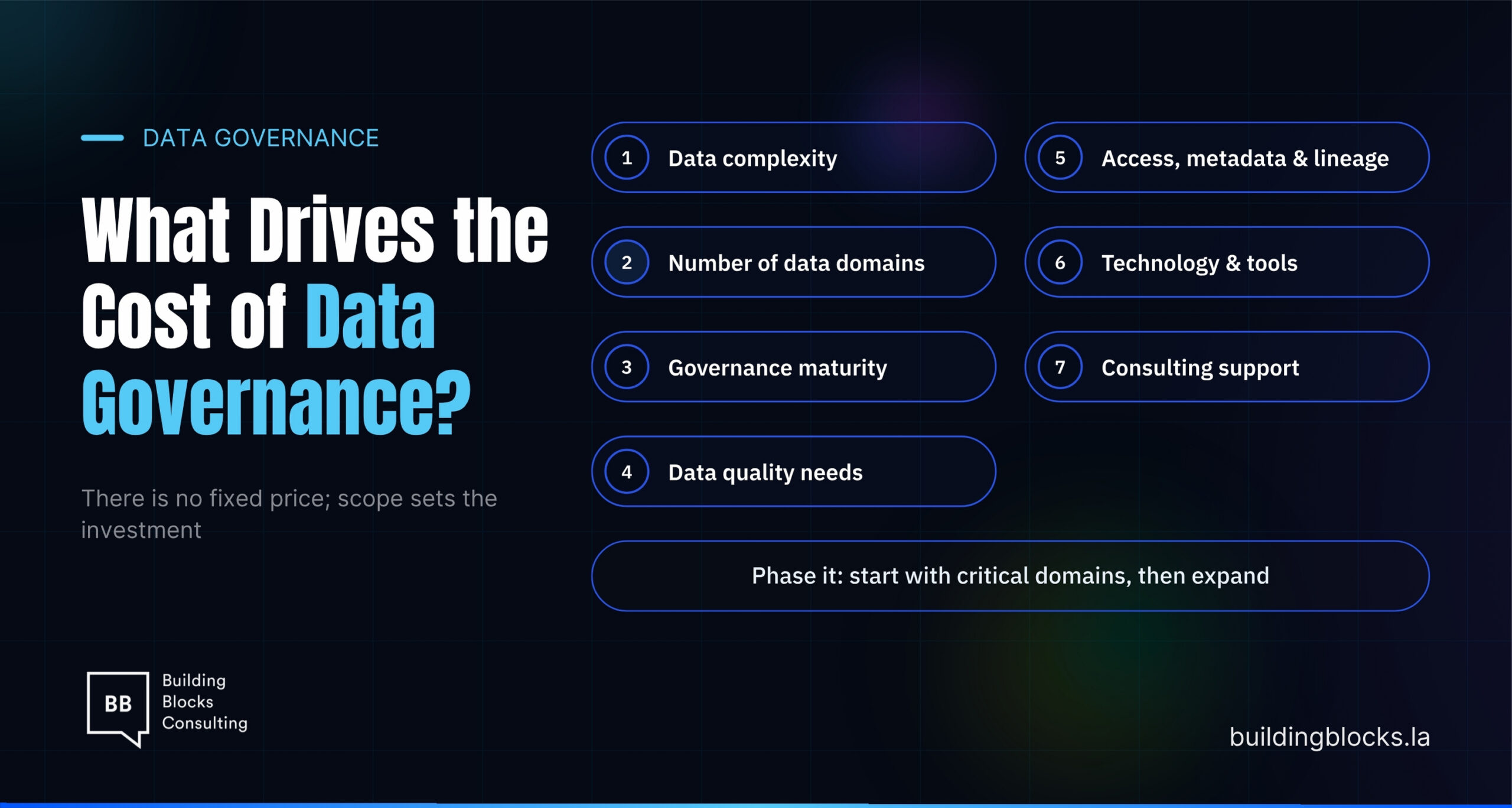
The cost of enterprise data governance depends on the organization’s size, data environment, governance maturity, and the scope of work required.
There is no universal price for data governance because organizations have very different requirements. A mid-sized business with a few critical data domains may need a focused governance program, while a large enterprise may need governance across multiple business units, systems, data platforms, and regulatory environments.
Instead of looking for a fixed price, businesses should evaluate what needs to be governed, how much work is required, and what capabilities need to be implemented.
What Affects the Cost of Data Governance?
Several factors can influence the investment required for an enterprise data governance program.
Organization and Data Complexity
The size of an organization matters, but the complexity of its data environment can matter even more.
An organization with data spread across many applications, databases, cloud platforms, and business units will generally require more governance effort than one with a relatively centralized environment.
The number of stakeholders involved in governance decisions can also affect the scope.
Number of Data Domains
Organizations rarely need to govern every type of data at the same level from the beginning.
Important domains might include customer, financial, employee, product, supplier, or operational data.
A governance program covering a small number of critical domains will generally require less effort than one covering a large portion of the enterprise.
Many organizations therefore start with the data domains that have the greatest business importance, risk, or regulatory relevance.
Existing Governance Maturity
An organization with established data owners, policies, standards, and governance processes may need to improve or expand what already exists.
Organizations starting with limited formal governance may first need to establish basic ownership, stewardship, policies, and decision-making structures.
This difference in starting point can significantly affect the required investment.
A governance maturity assessment can help identify where the organization currently stands and what needs to be addressed first.
Data Quality Requirements
Data governance often includes responsibilities around data quality.
If important business data is incomplete, inconsistent, duplicated, or unreliable, the governance initiative may need to establish quality standards, ownership, monitoring, and issue-resolution processes.
The more extensive the data-quality problems, the more implementation work may be required.
For organizations where data quality is already well managed, governance may focus more on accountability, standards, and ongoing oversight.
Data Access, Metadata, and Lineage
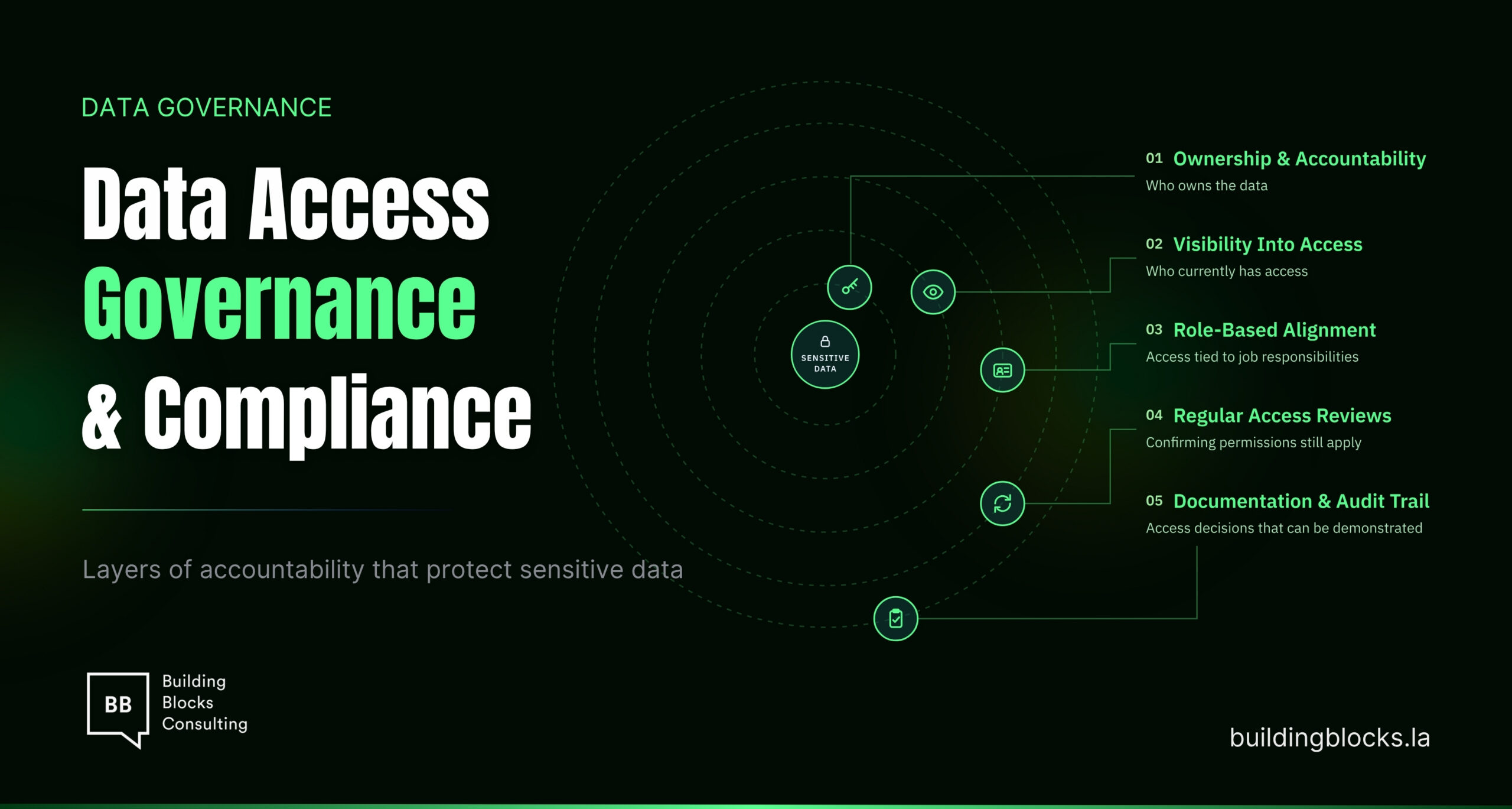
Additional requirements around data access governance, metadata, and data lineage can also increase the scope of a governance program.
Organizations managing sensitive information may need clear access responsibilities and review processes.
Organizations with complex data environments may also need better visibility into what data exists, where it comes from, who owns it, and how it moves between systems.
These requirements can involve both governance processes and supporting technology.
Technology and Governance Tools
Technology is another potential cost consideration.
Organizations may use tools for data catalogs, metadata management, data quality, lineage, access governance, and related governance activities.
However, purchasing a governance platform does not automatically create an effective governance program.
Technology should support clearly defined policies, responsibilities, and processes.
The cost of technology therefore needs to be considered alongside implementation, configuration, integration, and ongoing administration.
Consulting and Implementation Support
Some organizations have internal teams capable of designing and implementing their governance program.
Others may need external data governance consulting services to assess their current environment, develop a framework, establish governance roles, or support implementation.
The level of external support can vary considerably.
A company with an experienced internal governance team may only need specialized guidance. An organization building governance capabilities from the ground up may require more extensive support.
Does Data Governance Need to Be Implemented All at Once?
Not necessarily.
A phased approach can make governance more manageable, particularly for mid-sized organizations.
Instead of attempting to govern every data asset immediately, an organization can begin with its most important data domains.
For example, a company could first establish ownership and standards for customer and financial data. Once those processes are working effectively, governance can expand into additional domains.
This approach allows the organization to build experience while controlling the initial scope of the program.
How Should Businesses Think About the Value of Data Governance?
The investment in data governance should be considered alongside the problems the organization is trying to solve.
Better governance can help organizations establish clearer data ownership, improve data quality, make information easier to understand, strengthen access accountability, and improve visibility into how data moves through the organization.
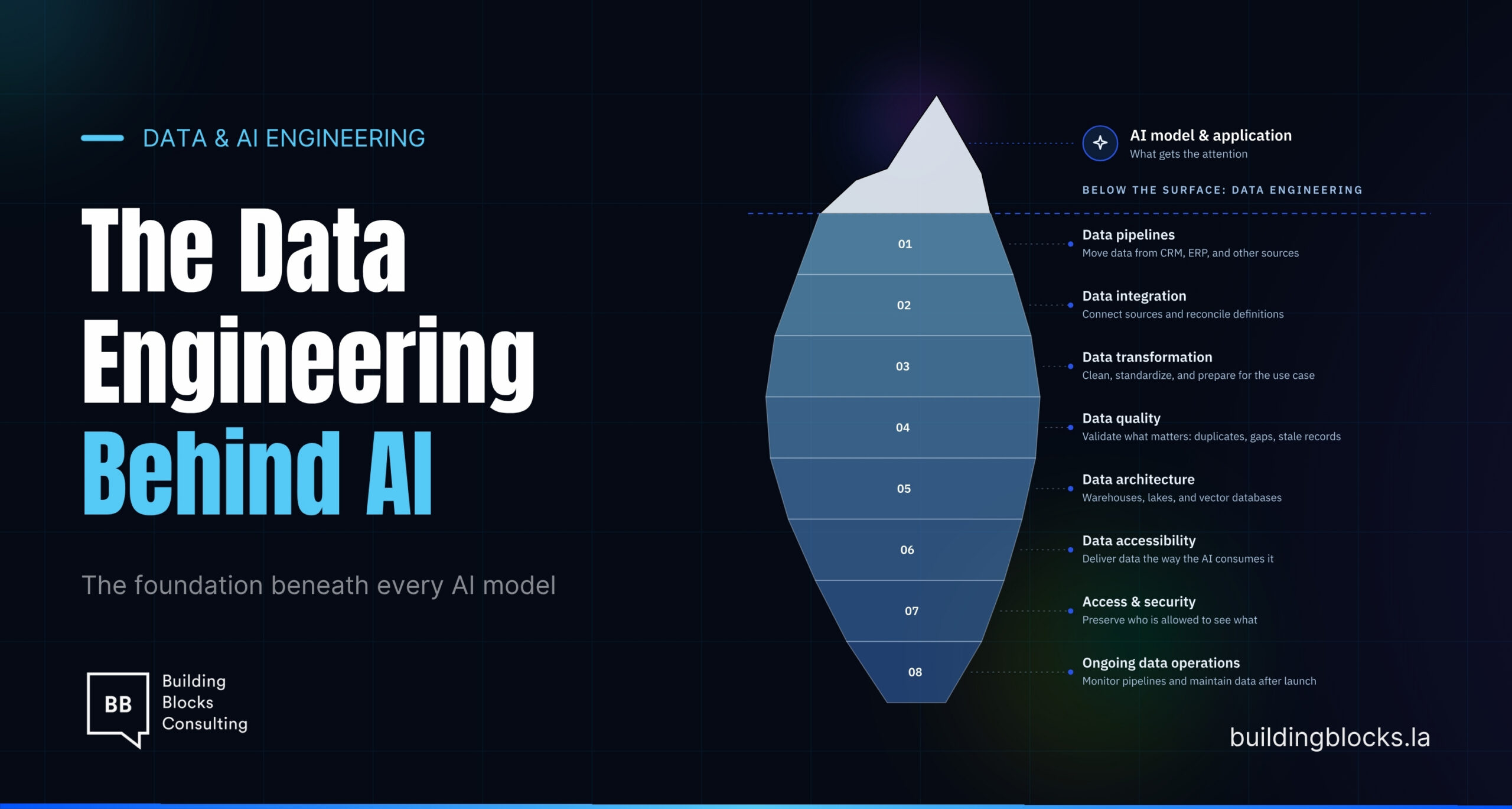
It can also provide a stronger foundation for analytics and AI initiatives.
For example, if employees spend significant time resolving inconsistent data or determining which source should be trusted, better governance may reduce that operational burden.
The business value will depend on the organization’s specific challenges rather than on a universal ROI figure.
What Should a Business Define Before Estimating Cost?
Before requesting a proposal or budget estimate, organizations should clarify several basic requirements.
Consider:
- Which data domains are most important?
- What governance problems need to be addressed?
- Who currently owns critical data?
- How mature are existing governance processes?
- Are data-quality problems part of the initiative?
- Are sensitive or regulated datasets involved?
- Is metadata or lineage visibility required?
- What internal resources are available?
- How much implementation support is needed?
Having answers to these questions makes it easier to define the scope and compare potential approaches.
How BuildingBlocks Can Help
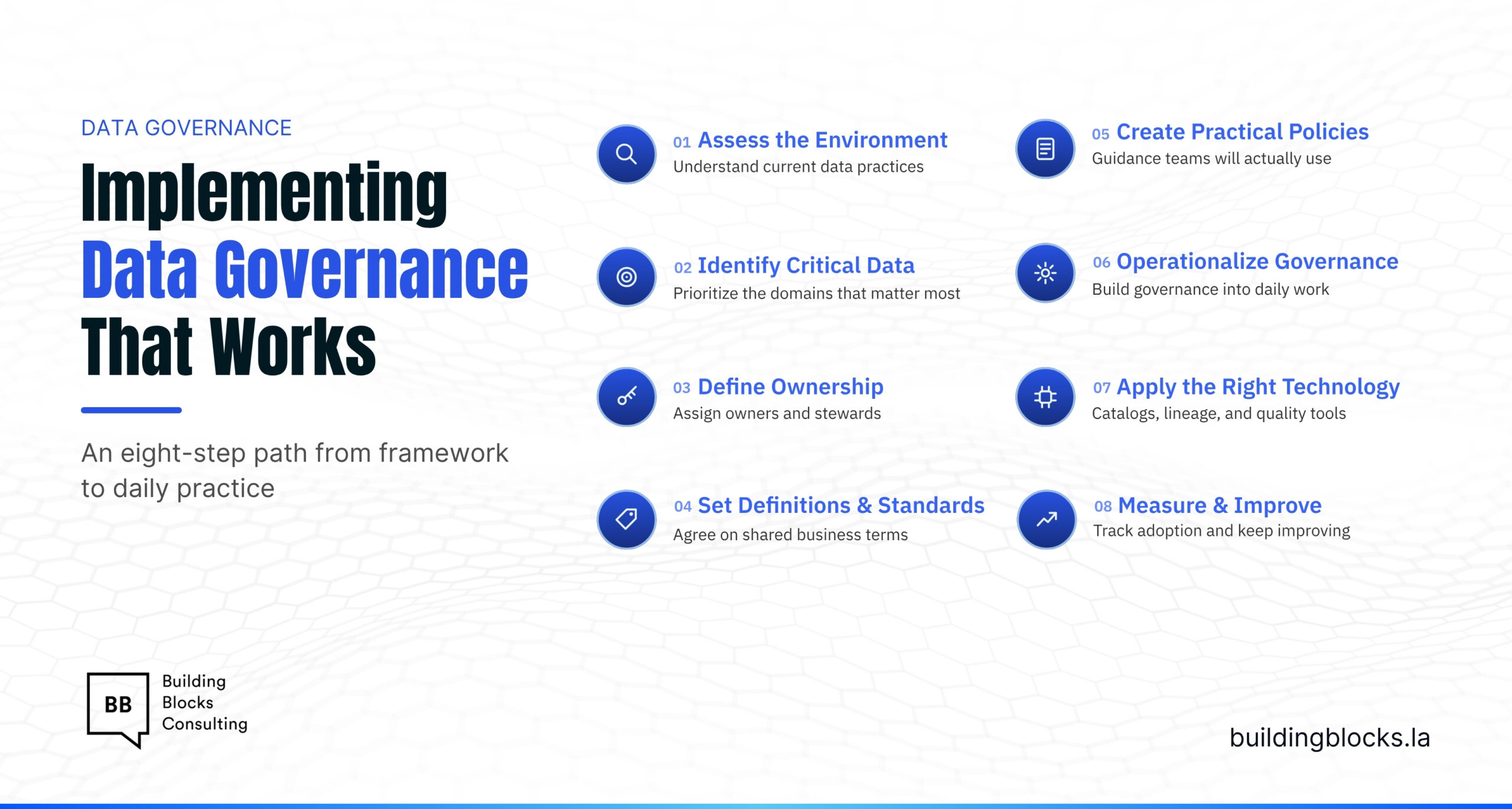
BuildingBlocks Consulting provides Data Governance Services to help organizations assess governance maturity, establish data ownership and stewardship, define standards, improve data quality practices, strengthen access governance, and operationalize governance processes.
The appropriate scope depends on the organization’s data environment, business priorities, governance maturity, and implementation requirements.
For organizations evaluating the investment required, an assessment can help identify the most important governance gaps and determine which areas should be addressed first.
Build a Governance Program That Matches Your Needs
Enterprise data governance does not have to mean implementing every governance capability across the organization at once.
The right investment depends on the organization’s priorities, data environment, governance maturity, and business requirements.
A practical approach is to assess the current state, prioritize critical data, define the required governance capabilities, and implement them in manageable stages.
This helps organizations invest in the areas where governance can create the greatest value while building a foundation that can evolve as the business and its data environment grow.



By Chris Clifford
Chris Clifford was born and raised in San Diego, CA and studied at Loyola Marymount University with a major in Entrepreneurship, International Business and Business Law. Chris founded his first venture-backed technology startup over a decade ago and has gone on to co-found, advise and angel invest in a number of venture-backed software businesses. Chris is the CSO of Building Blocks where he works with clients across various sectors to develop and refine digital and technology strategy.