


How can we help?
Let's Talk
How can we help?
Let's Talk
An enterprise data governance framework gives an organization a structured way to manage data ownership, quality, access, standards, and accountability.
But creating a governance document is only the beginning. The real challenge is making governance part of everyday business and technology operations.
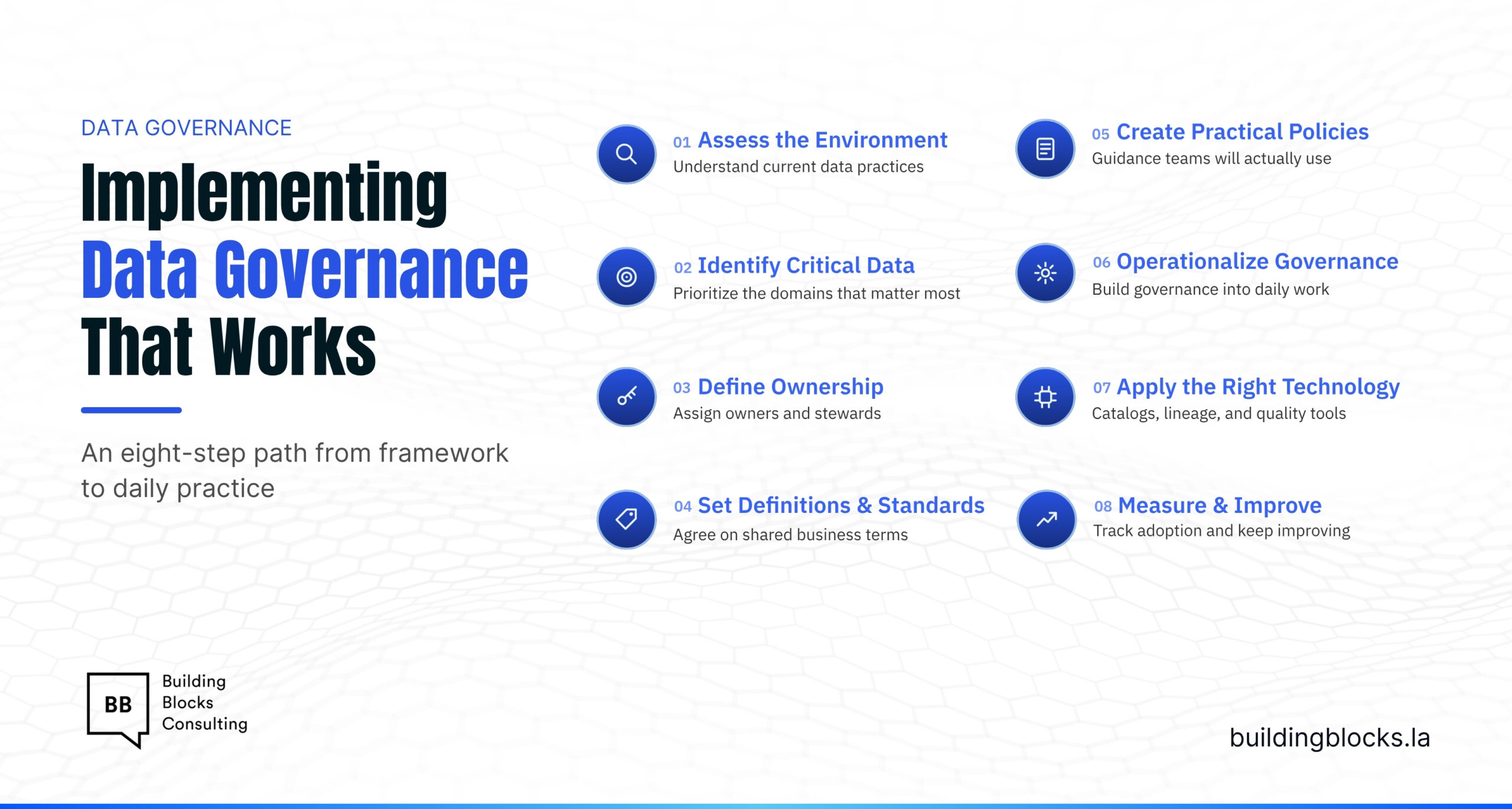
A successful implementation typically starts by assessing the current environment, identifying critical data, defining ownership, establishing practical standards, and gradually integrating governance into existing processes.
What Is an Enterprise Data Governance Framework?
An enterprise data governance framework defines how an organization makes decisions about its data.
It can establish:
- Data ownership and stewardship
- Data standards and definitions
- Data quality responsibilities
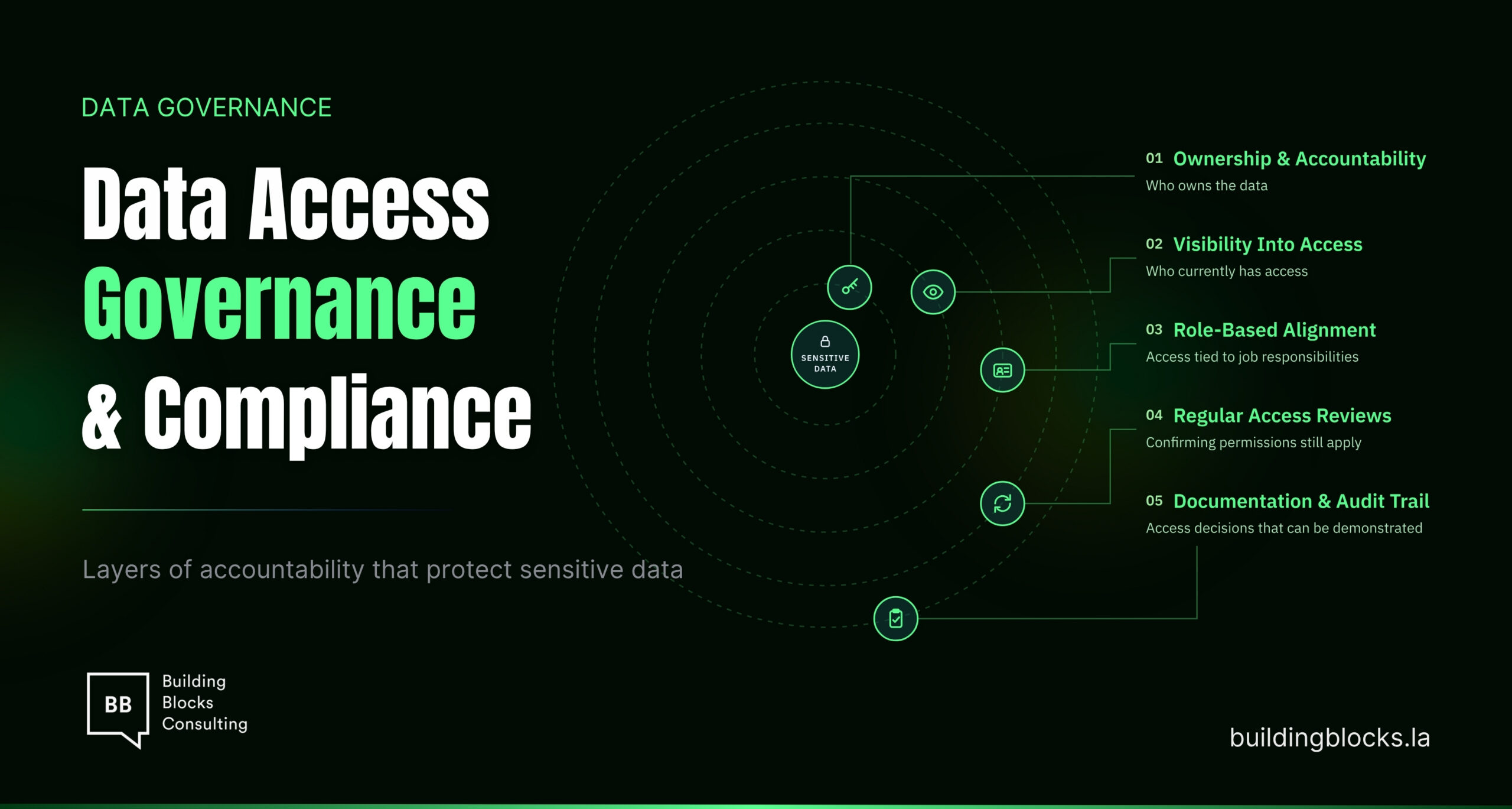
- Access and control requirements
- Metadata and lineage practices
- Governance policies and decision-making
The framework provides structure, but it does not create effective governance on its own. Employees and teams need clear responsibilities and practical processes for applying it.
How to Implement Data Governance Successfully
1. Assess the Current Data Environment
Start by understanding how data is currently managed.
Review key data sources, systems, business processes, existing policies, ownership structures, data-quality practices, and technology.
The goal is to identify what already works and where the most important governance gaps exist.
2. Identify Critical Data
Trying to govern everything at once can make implementation unnecessarily complicated.
Instead, identify the data domains and assets that matter most to the organization.
These may include customer, financial, employee, product, operational, or other critical data.
Prioritizing important data gives the governance program a manageable starting point.
3. Define Data Ownership and Stewardship
Governance requires clear accountability.
Data owners should be responsible for important decisions concerning their data domains, while data stewards can support day-to-day activities such as maintaining definitions, monitoring quality, and resolving issues.
The exact roles will depend on the organization’s structure, but responsibilities should be clear.
4. Establish Data Definitions and Standards
Different departments may use the same business terms differently.
For example, different teams may have different definitions of an “active customer.”
Establishing agreed definitions for important business terms can improve consistency across reporting, analytics, operations, and AI initiatives.
Standards should also define how important data is managed, accessed, classified, or maintained.
5. Create Practical Governance Policies
Policies should provide useful guidance rather than becoming a collection of documents that employees rarely use.
Depending on the organization’s requirements, policies may address data quality, access, classification, privacy, retention, metadata, lineage, and appropriate data use.
The objective is to create standards that teams can actually apply during everyday work.
6. Operationalize Governance
This is one of the most important parts of implementation.
Governance should be built into existing business and technical processes.
For example, when a new data source is introduced, its owner and important metadata should be identified. When a critical data-quality issue occurs, there should be a defined process for reporting and resolving it.
Governance works best when it becomes part of how work is performed rather than a separate administrative activity.
7. Use Technology Where It Adds Value
Technology can support governance through capabilities such as data catalogs, metadata management, data lineage, data quality, and access governance.
However, technology should support the governance model—not replace it.
Organizations should first understand their governance requirements and then determine which tools can help address them.
8. Measure and Improve
A governance program should have practical measures of progress.
Organizations might track whether critical data has assigned owners, whether data-quality issues are improving, whether important definitions are being adopted, or whether required access reviews are being completed.
These measurements should help governance leaders understand whether the program is actually improving data quality, accountability, visibility, and control.
Why Data Governance Should Be an Ongoing Operating Model
A data governance framework should not be treated as a one-time project.
Business systems change. New data sources are introduced. Organizational responsibilities evolve. Regulations change. AI and analytics capabilities expand.
Governance needs to evolve with them.
Regular reviews of ownership, standards, policies, data domains, and processes help keep the framework relevant as the organization changes.
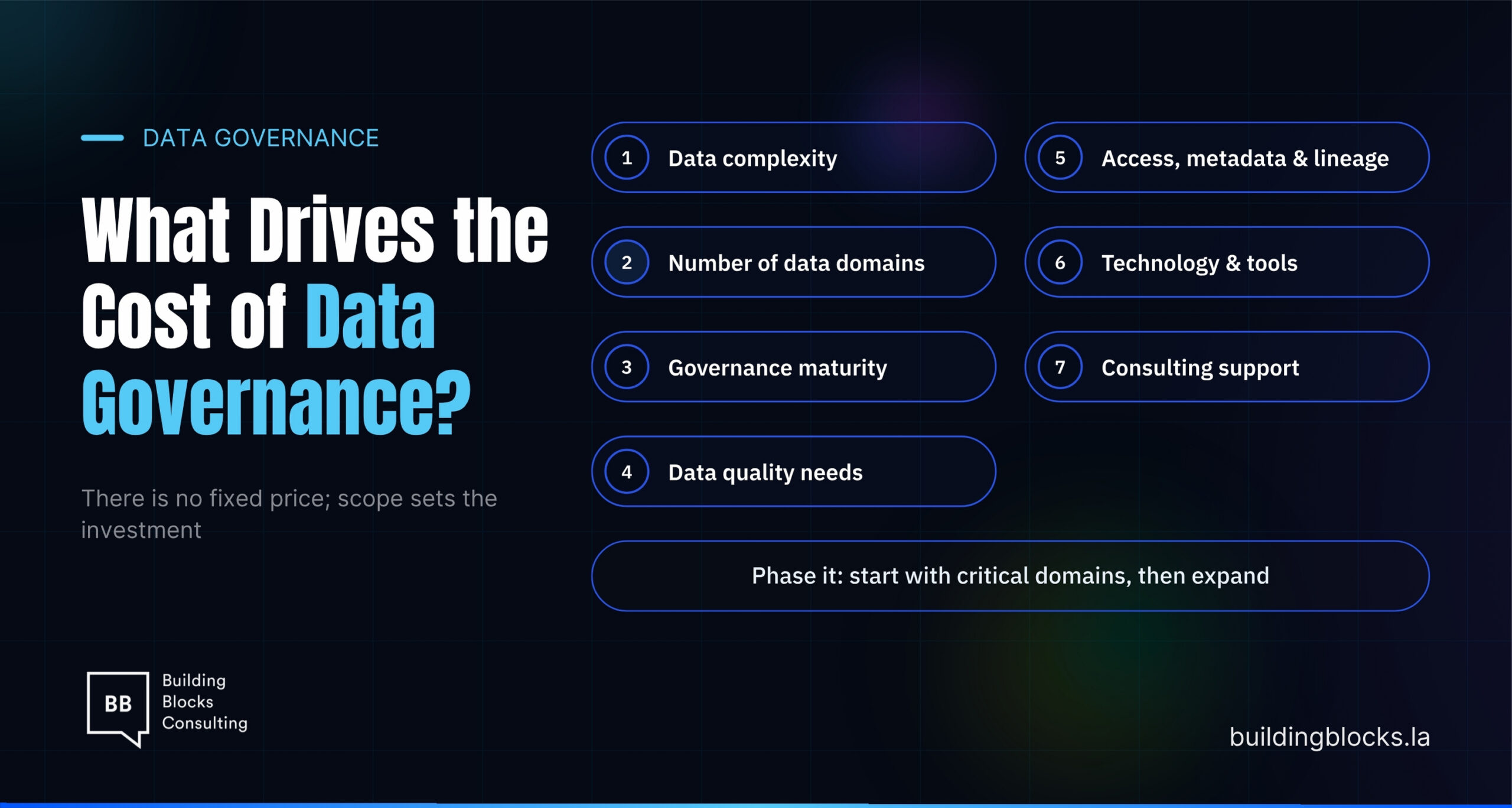
Start With Critical Data, Then Expand
Organizations do not necessarily need to implement enterprise-wide governance immediately.
A focused initiative around one or more critical data domains can provide a practical starting point.
Once ownership, standards, quality practices, and governance processes are working effectively, the organization can expand the framework to additional areas.
This approach can make implementation easier to manage while demonstrating the value of governance to business stakeholders.
Common Data Governance Implementation Mistakes
Several approaches can make governance harder than it needs to be.
Trying to govern every data asset immediately can overwhelm teams. Treating governance as purely a technology project can leave ownership and accountability unresolved. Excessive documentation can make policies difficult to follow.
Another common mistake is treating implementation as finished once the framework has been published.
Effective governance depends on adoption, accountability, and continuous improvement.
Data Governance and AI
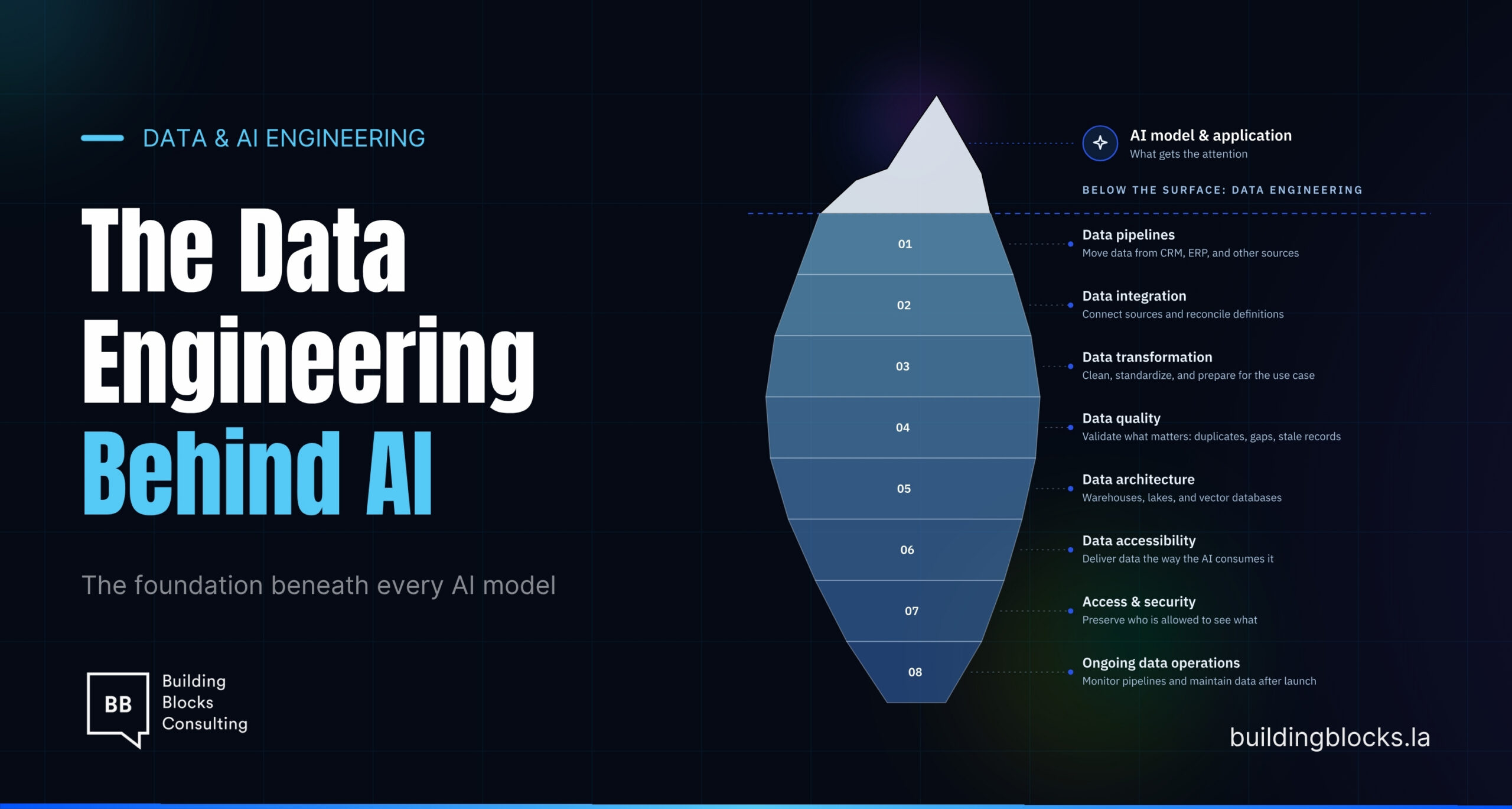
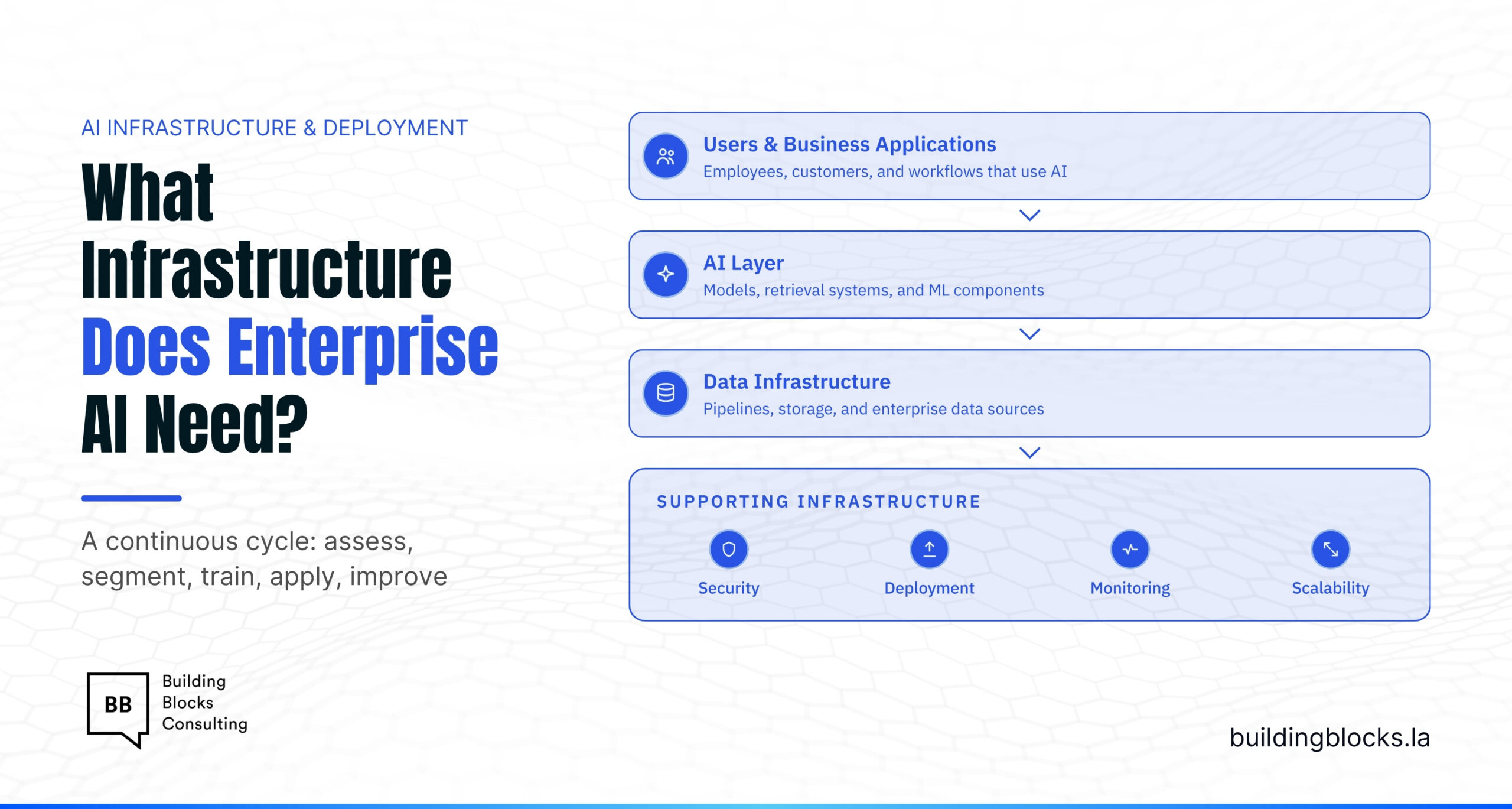
Data governance is increasingly important as organizations adopt AI.
AI initiatives depend on data, making data quality, ownership, definitions, access, and lineage important considerations.
A governance framework can help organizations understand what data is being used, who is responsible for it, and what controls should apply.
This can provide a stronger foundation for responsible and reliable AI adoption.
How BuildingBlocks Can Help
BuildingBlocks Consulting provides Data Governance Services to help organizations assess their current governance environment, establish ownership and stewardship, define standards, improve data quality practices, and operationalize governance.
The right approach depends on the organization’s data environment, business priorities, technology landscape, and governance maturity.
Organizations can begin with an assessment of their current state and then develop a practical governance program around their highest-priority needs.
Build a Data Governance Framework That Works
A successful enterprise data governance framework is more than a policy document.
It establishes clear ownership, practical standards, accountable roles, and processes that become part of everyday operations.
The most effective approach is usually to assess, prioritize, define, operationalize, measure, and continuously improve.
This allows organizations to build governance around their actual business and data requirements rather than creating a framework that exists only on paper.



By Chris Clifford
Chris Clifford was born and raised in San Diego, CA and studied at Loyola Marymount University with a major in Entrepreneurship, International Business and Business Law. Chris founded his first venture-backed technology startup over a decade ago and has gone on to co-found, advise and angel invest in a number of venture-backed software businesses. Chris is the CSO of Building Blocks where he works with clients across various sectors to develop and refine digital and technology strategy.