



How can we help?
Let's Talk
How can we help?
Let's Talk
Why Timing Matters More Than Talent When You Hire AI Engineers
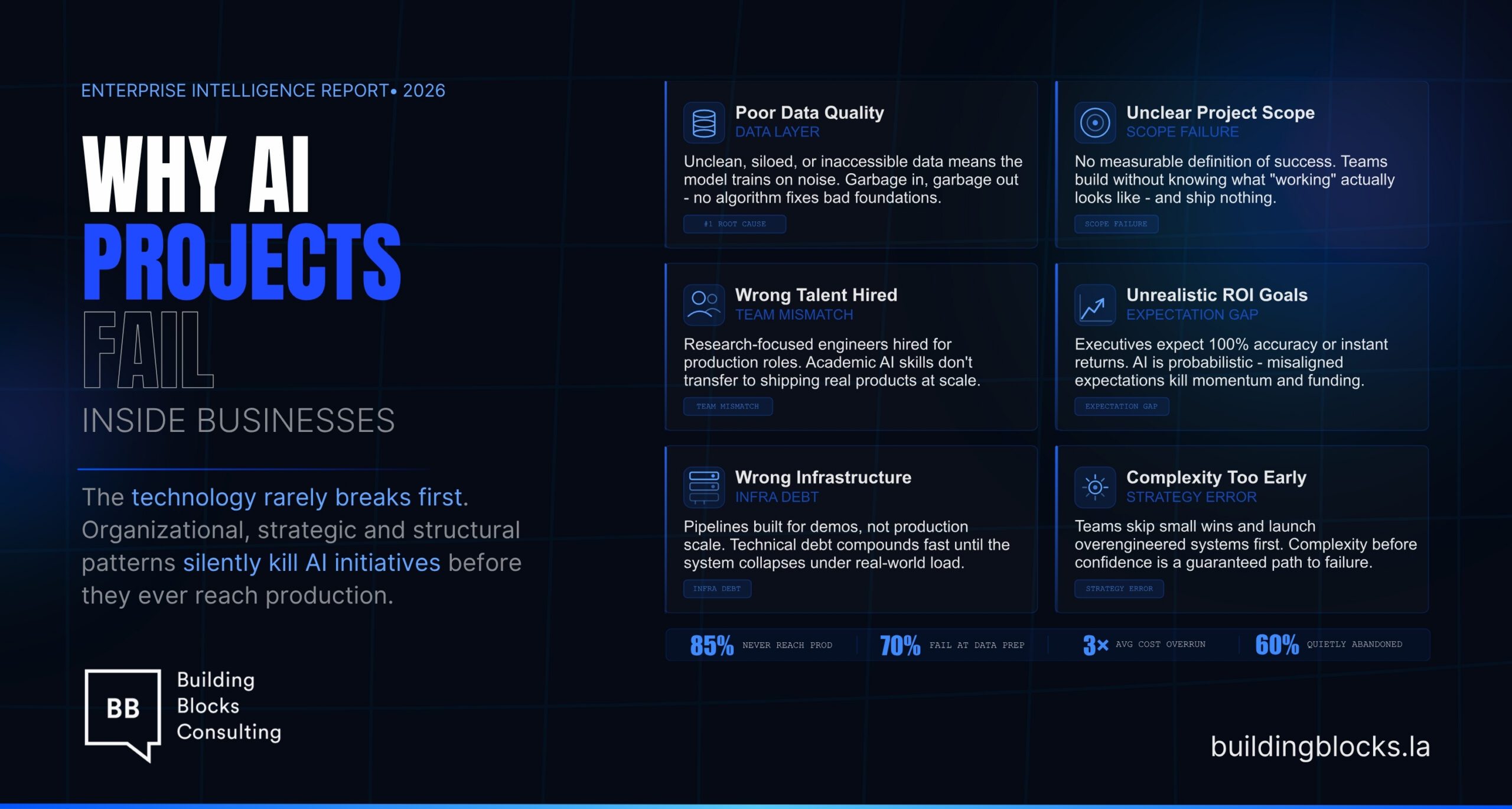
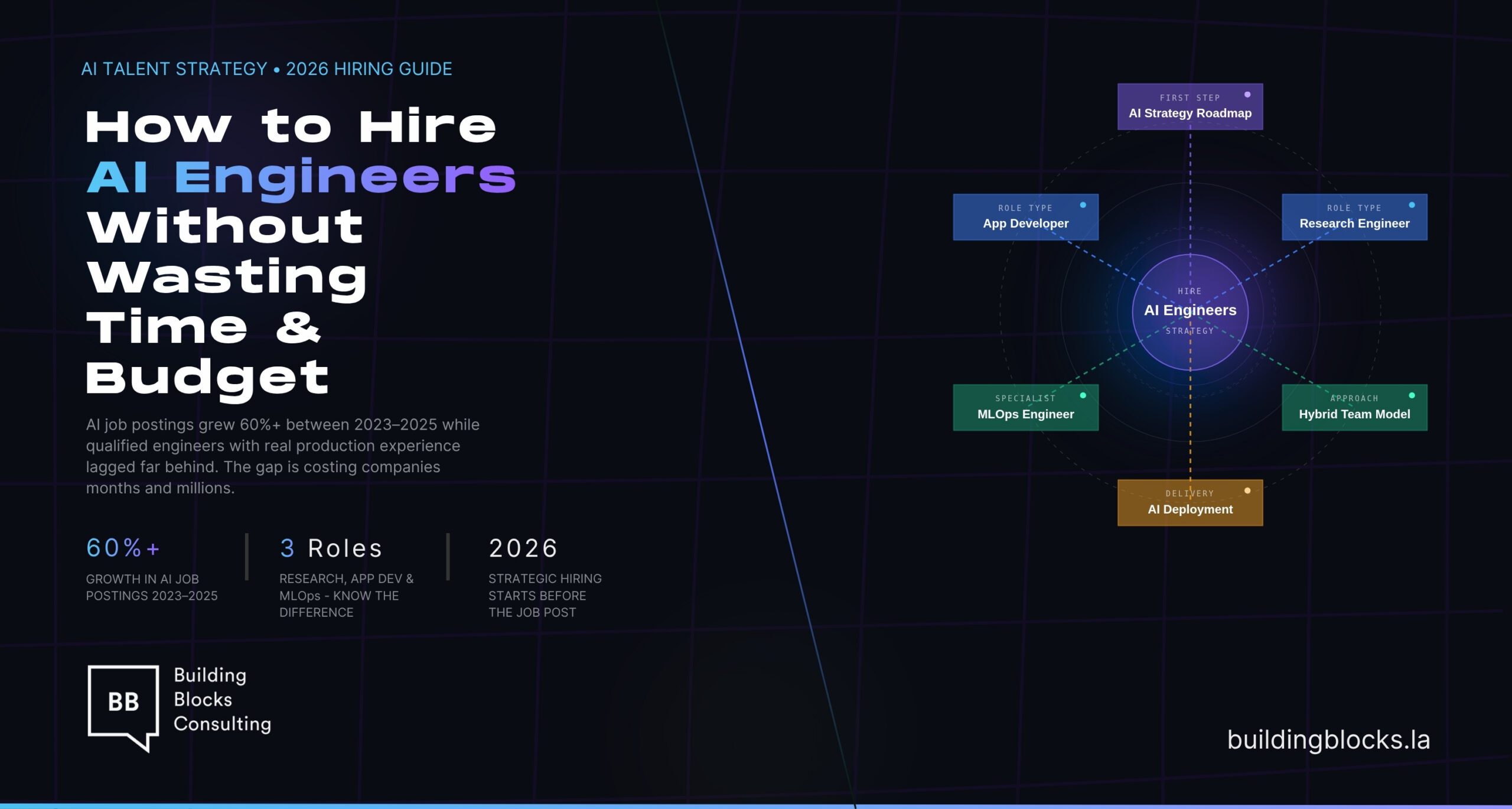
The decision to hire AI engineers often feels like a necessary step toward staying competitive. Boards ask about automation. Investors ask about intelligence. Competitors talk about transformation. So leadership teams move quickly, believing that bringing in specialized talent will accelerate progress. But in many growing businesses, the real issue is not capability. It is readiness. When companies hire AI engineers before defining ownership, priorities, and operational clarity, the result is rarely innovation. It is confusion, misalignment, and wasted spending.
When the Urge to Hire AI Engineers Starts Too Soon
The pressure to hire AI engineers usually begins when a company reaches operational complexity. Data is scattered. Decisions feel slower. Teams rely on manual coordination. Leadership senses inefficiency but cannot clearly define the root cause.
Instead of first clarifying processes and decision rights, the organization assumes technical talent will solve structural problems. The hire becomes a symbol of progress rather than a response to a clearly defined business need.
At this stage, the business may not yet have:
- Clear AI use cases tied to revenue or cost outcomes
- Documented workflows that can be improved
- A single executive owner is responsible for outcomes
- Clean, accessible internal data
Without these foundations, even strong engineers struggle to create a meaningful impact.
Signs Your Organization Is Not Ready to Hire AI Engineers
- No executive owner for AI-related outcomes
- Use cases framed as “we should do something with AI.”
- Frequent strategy changes Unclear data governance
- Limited cross-functional coordination
These gaps are organizational, not technical. Hiring alone does not solve them.
The Readiness Gaps That Make Early AI Hiring Expensive
Hiring AI engineers before internal alignment creates friction in subtle ways.
First, priorities shift weekly. One department wants automation. Another wants predictive insights. Leadership wants faster reporting. Engineers receive mixed signals and build in isolation.
Second, there is no clear success definition. If the business has not defined what “better” looks like, progress becomes subjective. This leads to frustration on both sides.
Third, engineers end up spending time cleaning data, clarifying processes, and aligning teams. That work is important, but it is not why they were hired. The cost becomes hidden in delays and stalled initiatives.
What Happens When You Hire AI Engineers Without Structure
The consequences of premature hiring are rarely dramatic. They are gradual.
Projects expand without finishing. Pilots remain in testing mode. Teams question ROI. Leadership begins to doubt the hire. Eventually, the initiative loses momentum.
Below is a simplified comparison of what often changes when structure is missing versus when it is established.

The difference is not in talent quality. It is organizational clarity.
Signs Your Organisation Is Not Ready to Hire AI Engineers
- No executive owner for AI-related outcomes
- Use cases framed as “we should do something with AI.”
- Frequent strategy changes Unclear data governance
- Limited cross-functional coordination
These gaps are organizational, not technical. Hiring alone does not solve them.
Why Leadership Ownership Matters More Than Technical Skill
When companies decide to hire AI engineers, they often delegate responsibility downward. The assumption is that technical experts will identify opportunities and execute independently.
In reality, AI initiatives require senior ownership. Someone at the executive level must define:
- The business problem being solved
- The expected operational change
- The decision-making authority
- The integration into existing teams
Without this, engineers operate in a vacuum. This is where experienced advisory support becomes valuable. Firms like BuildingBlocks Consulting help leadership teams define scope, governance, and accountability before new technical hires are made. The goal is not to slow hiring. It is to ensure hiring supports a defined strategy.
The Financial Risk of Hiring AI Engineers Too Early
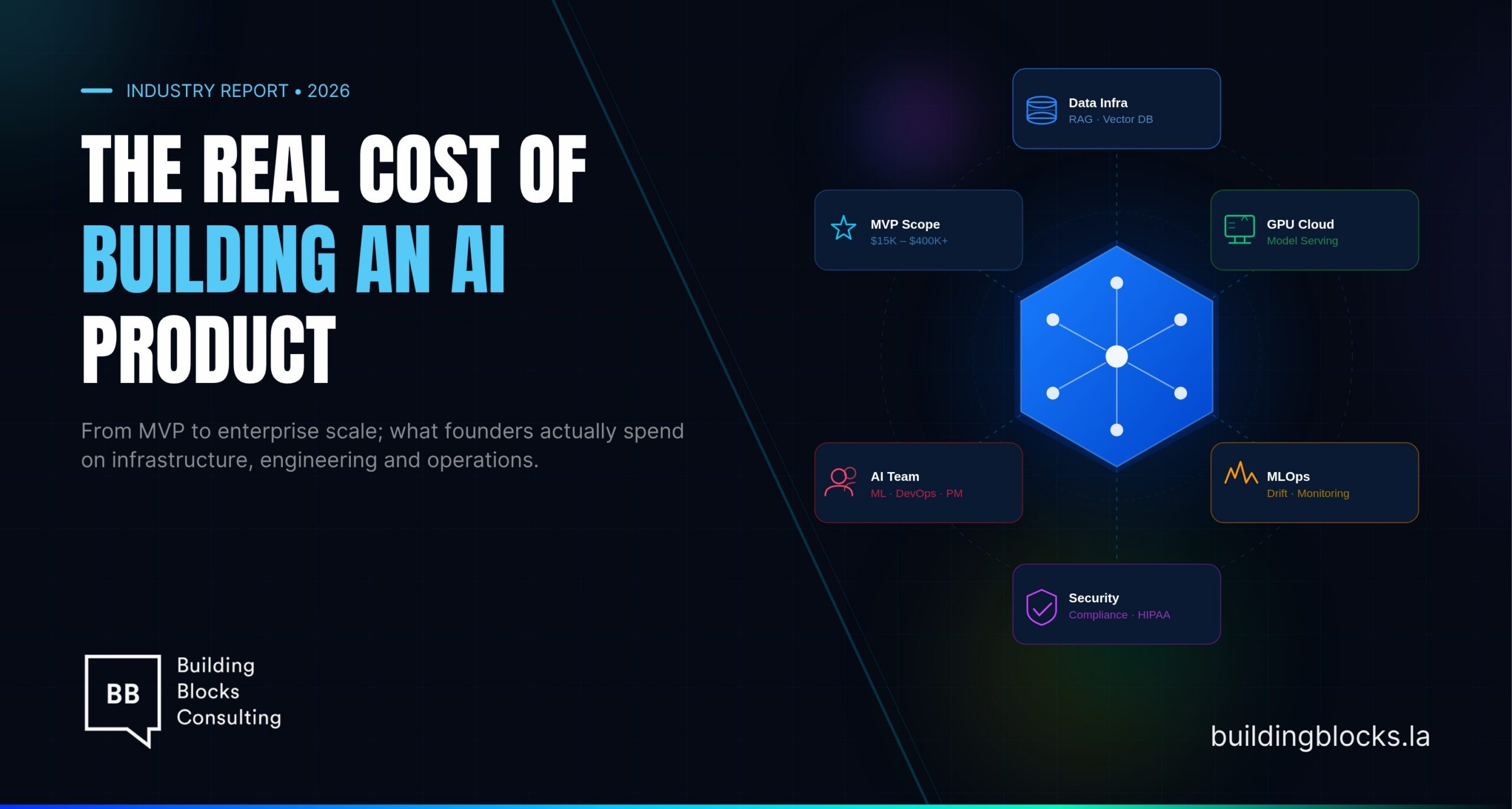
The financial risk is not just salary cost. It includes opportunity cost and internal distraction.
When AI initiatives stall, leadership attention is diverted. Managers spend time resolving conflicts. Technical talent becomes underutilized. Momentum slows across departments.
More importantly, early missteps can create internal skepticism. Teams begin to see AI as an expensive experiment rather than a structured capability. Rebuilding trust later becomes harder.
Businesses that approach the decision with preparation avoid this pattern. They treat the hire as an execution step, not an exploratory one.
BuildingBlocks Consulting often works with companies at this stage to clarify whether the organization is ready to hire AI engineers or whether foundational alignment should come first. In many cases, small structural adjustments unlock more value than immediate hiring.
When It Actually Makes Sense to Hire AI Engineers
The right time to hire AI engineers is when three conditions exist:
- First, the business problem is clearly defined and tied to operational outcomes.
- Second, ownership is assigned at the leadership level, with decision authority and accountability.
- Third, data access and governance are understood well enough to support execution.
- At this point, engineers can focus on building rather than diagnosing organizational confusion.
- Hiring then becomes an accelerator, not an experiment.
How Experienced Partners Reduce Execution Risk
External advisors play a different role than engineers. They assess readiness, define structure, and clarify business priorities.
An experienced partner will:
- Evaluate whether the problem is technical or structural
- Align stakeholders around one clear objective
- Define governance and reporting expectations
- Establish realistic implementation phases
This reduces the risk that hiring AI engineers becomes a reactive decision. Execution improves when strategy precedes staffing.
A Practical Way to Think About the Decision to Hire AI Engineers
The decision to hire AI engineers should not begin with a job description. It should begin with a leadership conversation about ownership, outcomes, and readiness. When companies move too quickly, the cost is not visible on a balance sheet. It appears in stalled projects, unclear priorities, and lost momentum. When companies prepare first and hire second, engineers operate within clarity and deliver measurable impact. Timing, not urgency, determines whether the investment strengthens the business or quietly drains it.



By Chris Clifford
Chris Clifford was born and raised in San Diego, CA and studied at Loyola Marymount University with a major in Entrepreneurship, International Business and Business Law. Chris founded his first venture-backed technology startup over a decade ago and has gone on to co-found, advise and angel invest in a number of venture-backed software businesses. Chris is the CSO of Building Blocks where he works with clients across various sectors to develop and refine digital and technology strategy.