


How can we help?
Let's Talk
How can we help?
Let's Talk
Over the last two years, AI product development has shifted from experimental innovation to competitive necessity. Startups are racing to integrate generative AI into SaaS platforms, enterprises are automating workflows with intelligent systems, and investors increasingly expect companies to have a realistic AI roadmap.
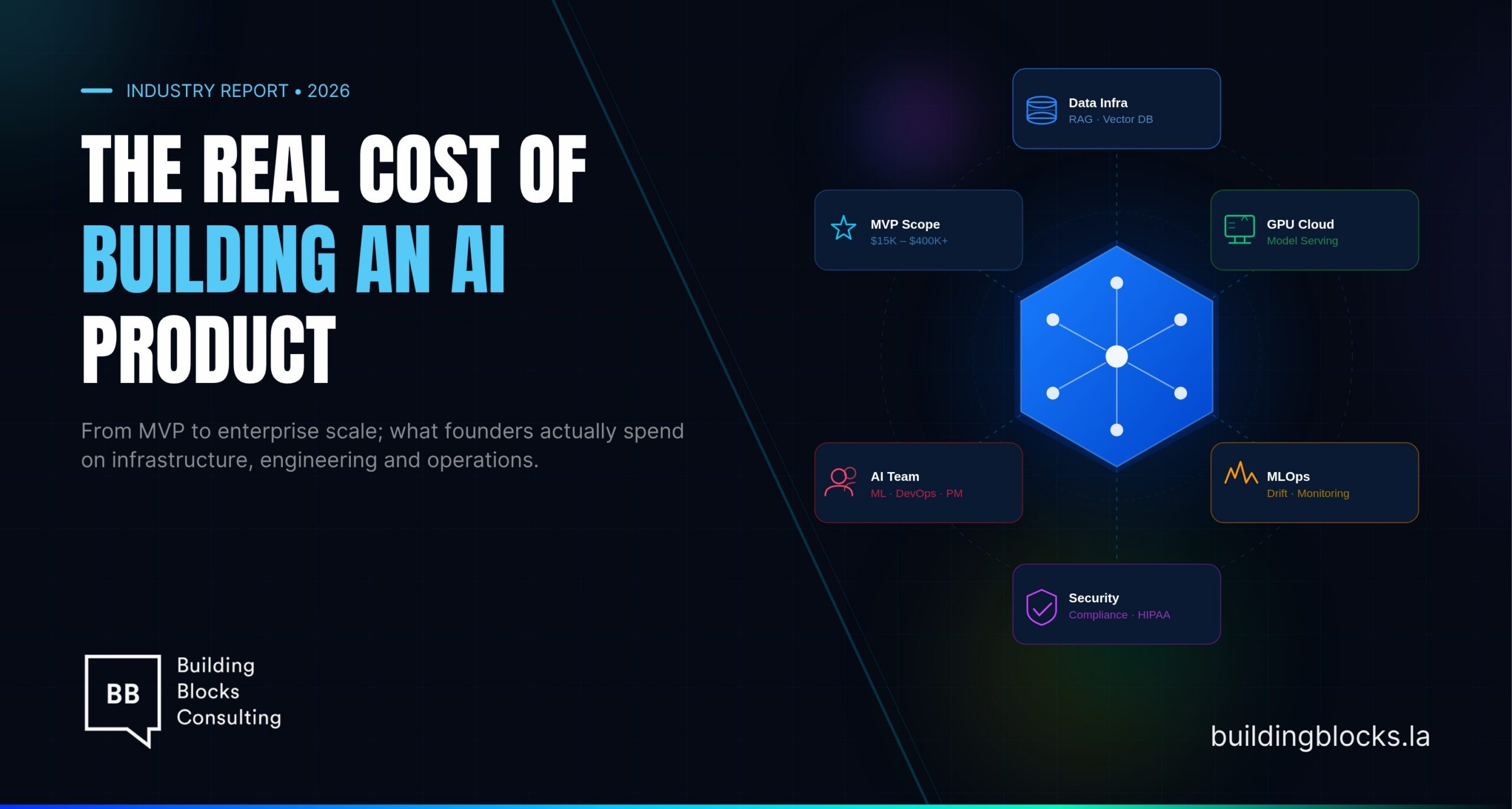
But despite the growing excitement around artificial intelligence, most businesses still misunderstand what actually drives AI product costs.
The challenge is not simply integrating an API or deploying a chatbot. The real cost of building an AI product comes from infrastructure planning, engineering complexity, data readiness, scalability requirements, security considerations, deployment workflows, and long-term operational maintenance.
This is why some businesses launch practical AI products quickly while others spend months experimenting without reaching production readiness.
For founders and business owners, understanding the real economics behind AI implementation is becoming increasingly important before committing budget, hiring teams, or defining product strategy.
This guide breaks down the real cost of building an AI product in 2026, including the technical decisions, hidden operational expenses, hiring considerations, and strategic tradeoffs businesses should understand before starting development.
Why AI Products Cost More Than Traditional Software
Traditional software systems follow relatively predictable logic.
AI systems do not.
A standard application behaves according to predefined rules written directly into the software. AI systems operate differently because they depend on:
- training data
- probabilistic outputs
- model behavior
- continuous optimization
- infrastructure scaling
- operational monitoring
This changes both the engineering process and the long-term operational requirements.
For example, a normal SaaS dashboard may require:
- frontend development
- backend APIs
- authentication systems
- database architecture
An AI-powered platform may additionally require:
- model orchestration
- vector databases
- prompt optimization
- inference pipelines
- GPU infrastructure
- model monitoring
- retrieval systems
- retraining workflows
The complexity increases quickly as AI products scale.
Businesses evaluating long-term AI implementation often underestimate how infrastructure and operational planning influence scalability. Working with an experienced AI implementation and consulting partner early can help reduce expensive architectural mistakes later.
Planning an AI Product in 2026?
We help teams build scalable, production-ready AI systems that work reliably in real-world environments.
The Biggest Misconception About AI Development
Many founders assume AI products are expensive because of the models themselves.
In reality, models are often only one part of the system.
The majority of cost usually comes from:
- engineering coordination
- infrastructure architecture
- deployment systems
- integrations
- operational reliability
- scalability planning
This is especially true for products using:
- generative AI
- recommendation systems
- AI copilots
- enterprise automation
- intelligent search
- predictive analytics
The businesses that succeed with AI are rarely the ones building the largest models.
They are usually the ones building the best workflows, systems, and operational infrastructure around AI.
The Five Biggest Cost Drivers Behind AI Products
Understanding where AI costs actually come from helps businesses make better strategic decisions early.
1. Data Infrastructure
Most AI systems depend entirely on data quality.
This is one of the most overlooked parts of AI implementation.
Businesses often discover too late that:
- data is fragmented
- systems are disconnected
- records are inconsistent
- datasets are incomplete
- historical data lacks structure
Before AI development even begins, engineering teams frequently spend significant time on:
- data cleaning
- normalization
- labeling
- storage architecture
- pipeline creation
- access controls
Poor data infrastructure increases:
- development timelines
- model instability
- operational risk
- maintenance costs
Strong data systems reduce long-term AI costs dramatically.
2. AI Engineering and Product Development
AI products require cross-functional engineering.
Many founders initially assume they only need “an AI engineer.”
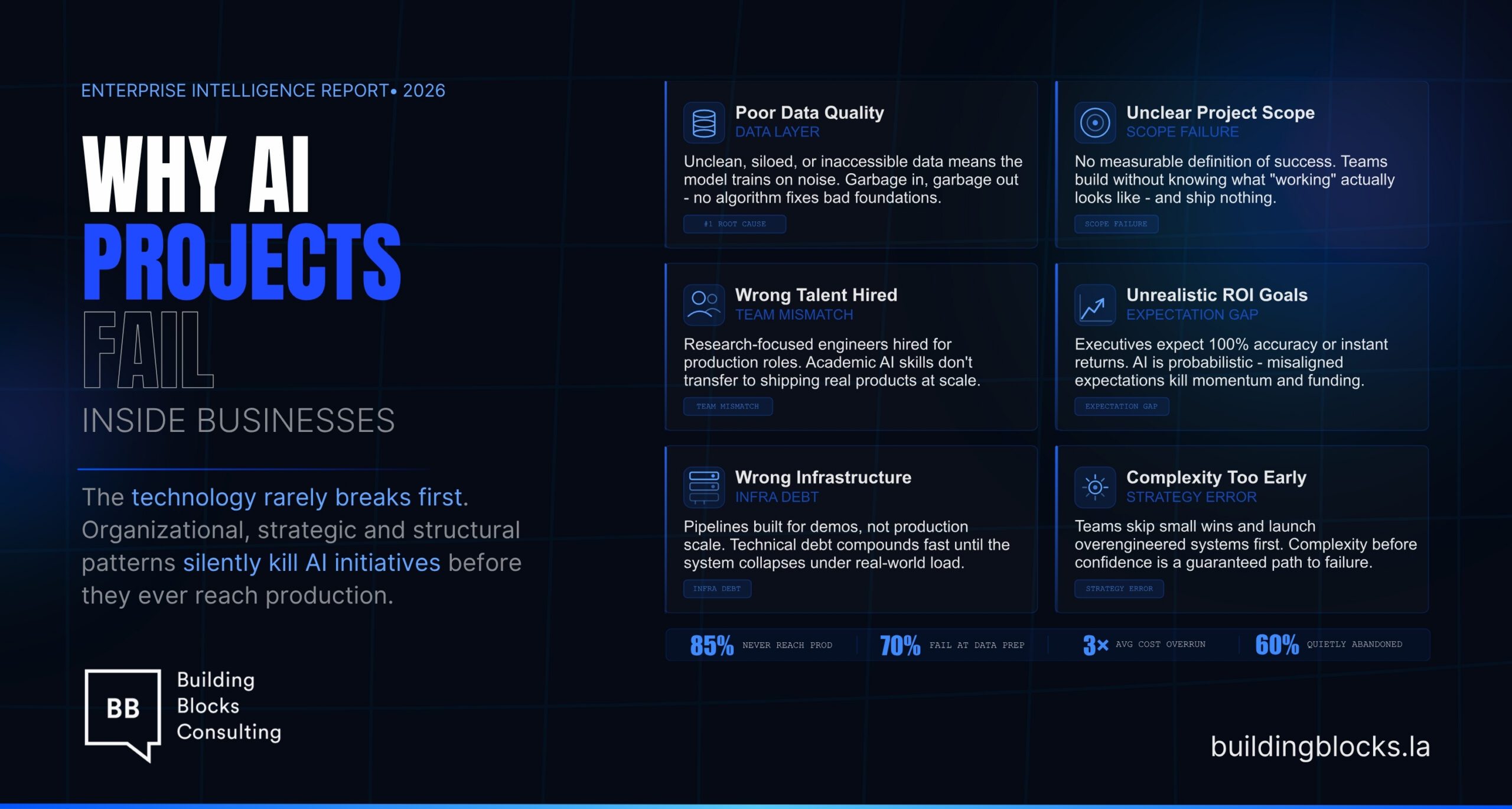
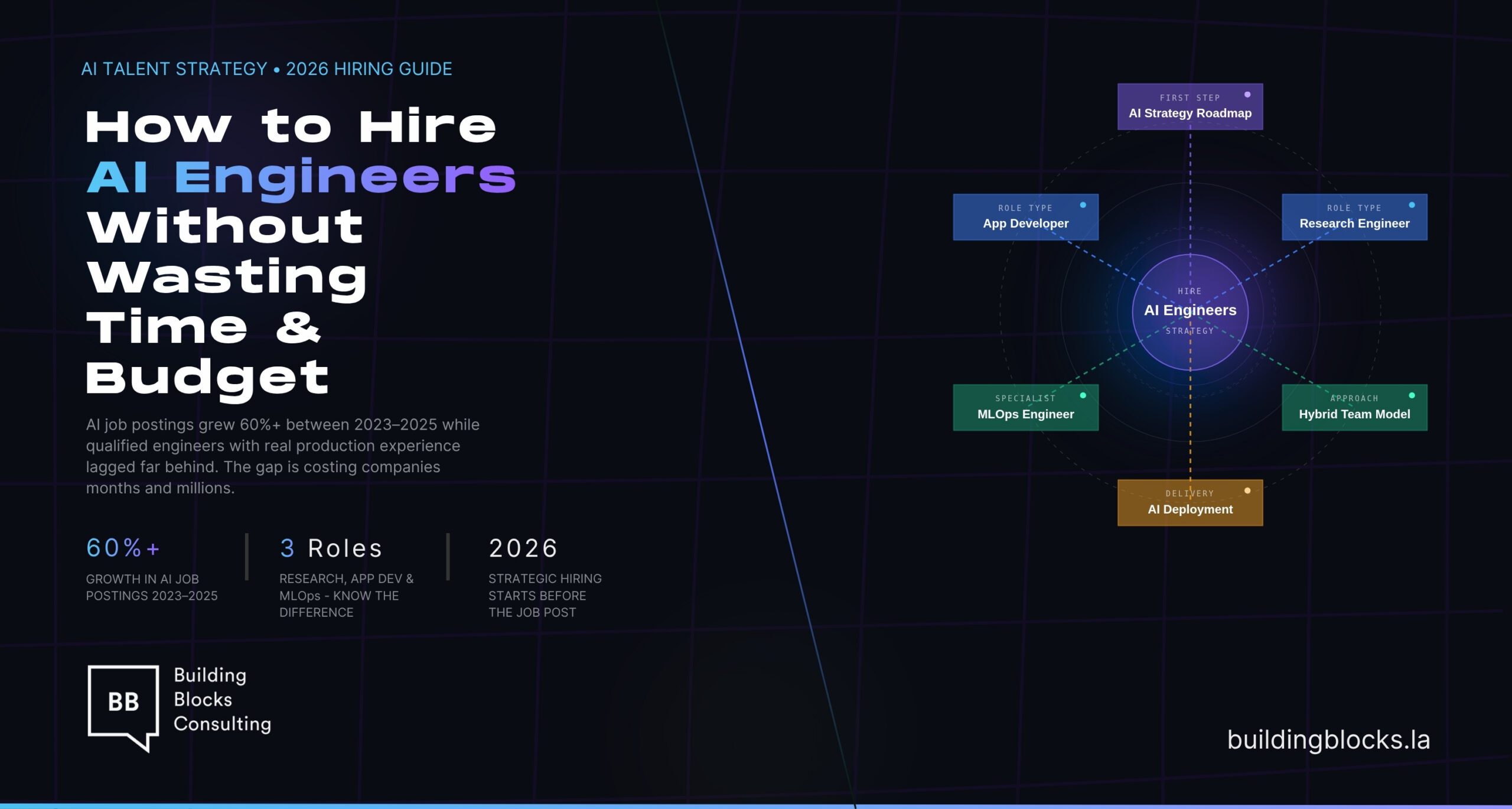
In practice, scalable AI systems often require:
- machine learning engineers
- backend developers
- infrastructure engineers
- DevOps specialists
- MLOps engineers
- frontend developers
- product managers
As products become more sophisticated, engineering coordination becomes one of the largest cost factors.
This is why many startups initially partner with specialized AI teams before building internal departments.
Businesses looking to scale quickly often choose to hire experienced AI developers through specialized partners rather than spending months recruiting internally during early-stage product validation.
3. Infrastructure and Cloud Costs
Infrastructure becomes increasingly expensive as AI products scale.
This includes:
- GPU servers
- cloud hosting
- model serving
- vector databases
- inference systems
- API management
- storage pipelines
- monitoring tools
For early-stage MVPs, infrastructure costs may remain relatively manageable.
But enterprise-scale AI systems handling large user volumes often require highly scalable infrastructure capable of processing thousands or millions of AI requests efficiently.
One of the biggest operational mistakes businesses make is underestimating long-term infrastructure costs after launch.
Poor infrastructure decisions early can significantly increase monthly operational expenses later.
4. Monitoring and MLOps
Unlike traditional software, AI systems require continuous monitoring after deployment.
This includes:
- model performance tracking
- hallucination monitoring
- prompt optimization
- retraining workflows
- infrastructure scaling
- drift detection
- reliability testing
AI products evolve continuously after launch.
Without proper monitoring systems, performance degradation can quickly impact:
- customer experience
- operational reliability
- infrastructure efficiency
- business outcomes
MLOps has become one of the most important operational layers in modern AI product development.
5. Security and Compliance
Businesses operating in industries like:
- healthcare
- fintech
- legal technology
- insurance
- enterprise SaaS
often require additional infrastructure focused on:
- encryption
- compliance
- audit trails
- secure access management
- governance systems
These requirements increase:
- engineering scope
- deployment timelines
- infrastructure complexity
- maintenance overhead
AI implementation becomes significantly more expensive when regulatory compliance is involved.
Typical AI Product Cost Ranges in 2026
AI product pricing varies dramatically depending on:
- complexity
- infrastructure requirements
- deployment scale
- integrations
- compliance
- operational maturity
The estimates below reflect common US market pricing in 2026.
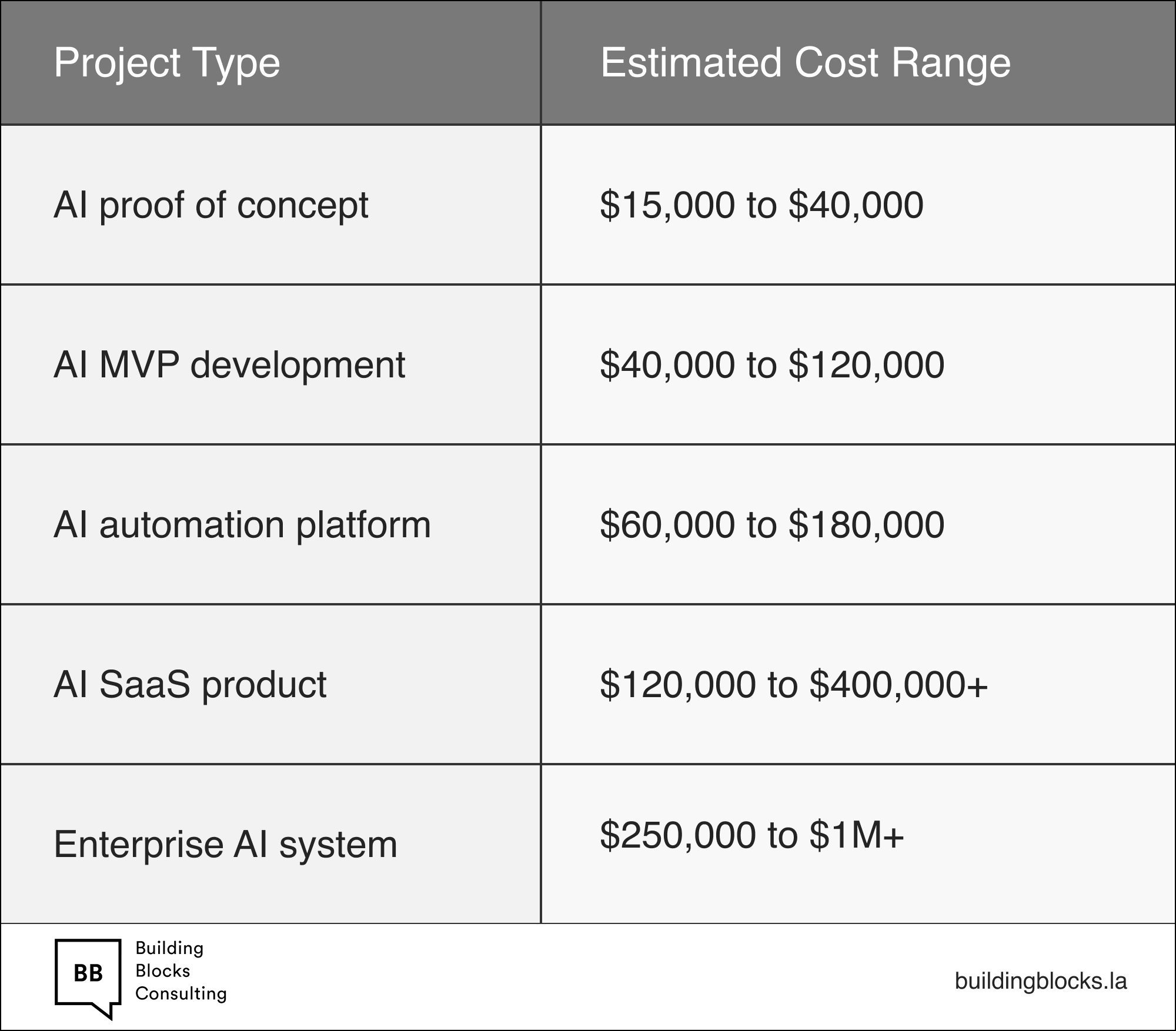
These numbers often surprise founders who initially expect AI implementation to behave like standard software development.
In reality, infrastructure and operational scalability become major cost drivers over time.
The Hidden AI Costs Most Founders Don’t Expect
The visible development budget is only part of the equation.
Several operational costs emerge after deployment.
Continuous Optimization
AI systems require constant refinement.
Businesses frequently discover:
- prompts need optimization
- workflows require adjustment
- outputs need evaluation
- automation logic must evolve
- user behavior changes over time
AI products are rarely “finished” after launch.
API and Usage Costs
Many businesses build AI products using third-party model providers.
This can accelerate development significantly.
However, usage costs increase as:
- user traffic grows
- prompts become larger
- inference volume increases
- retrieval systems expand
Without optimization, API expenses can become unpredictable quickly.
Technical Debt
Rapid AI experimentation often creates technical shortcuts.
Over time, this leads to:
- unstable infrastructure
- scaling problems
- integration failures
- maintenance complexity
- operational inefficiency
Technical debt becomes especially dangerous in AI systems because infrastructure complexity compounds rapidly as products grow.
Should Startups Build AI Products Internally?
This is one of the biggest strategic questions founders face in 2026.
Building internally provides:
- direct control
- internal expertise
- product ownership
- long-term technical continuity
But internal hiring also introduces:
- recruiting delays
- high compensation costs
- onboarding time
- infrastructure complexity
- operational overhead
Experienced AI engineers remain extremely competitive in the US market.
Many startups therefore begin with external implementation partners before scaling internal AI teams later.
An experienced AI partner can often help businesses:
- validate ideas faster
- reduce technical mistakes
- define realistic MVP scope
- accelerate deployment
- improve infrastructure planning
This hybrid approach reduces early-stage operational risk significantly.
Need Experienced AI Engineers Without Long Hiring Cycles?
We help teams quickly access experienced AI engineers to build and scale AI systems without long hiring delays.
Why AI MVP Scope Matters More Than Features
One of the biggest reasons AI products fail is oversized initial scope.
Founders frequently attempt to build:
- advanced automation
- multiple AI workflows
- enterprise infrastructure
- custom models
- analytics systems
all within the first release.
This dramatically increases:
- burn rate
- engineering complexity
- deployment delays
- infrastructure costs
Strong AI teams focus heavily on MVP discipline.
A successful AI MVP should:
- solve one meaningful problem
- validate market demand
- collect operational feedback
- reduce infrastructure complexity
- accelerate learning
The goal of an MVP is not perfection.
The goal is validation.
This is where experienced product strategy becomes critical.
Businesses approaching AI as part of broader operational modernization often benefit from a larger digital transformation strategy rather than treating AI as an isolated feature experiment.
What Founders Should Validate Before Investing in AI
Before allocating large budgets toward AI development, businesses should answer several strategic questions.
Is AI Actually Necessary?
Not every operational problem requires AI.
Some challenges are solved more effectively through:
- automation
- workflow optimization
- standard software systems
- process improvements
AI should support measurable business outcomes rather than exist purely for marketing value.
What Data Already Exists?
Strong datasets reduce implementation risk dramatically.
Businesses should evaluate:
- data quality
- accessibility
- consistency
- ownership
- privacy requirements
before development begins.
What Is the Fastest Path to Market Validation?
Early-stage businesses should prioritize:
- operational learning
- speed
- user feedback
- product validation
rather than attempting to build enterprise-scale infrastructure immediately.
Simple AI products often outperform overly complex systems during early growth stages.
How Building Blocks Helps Businesses Reduce AI Development Risk
Building Blocks AI Intelligence Services helps startups and enterprise organizations design, build, and scale AI-powered products with a strong focus on operational scalability and long-term maintainability.
Our team supports businesses through:
- AI strategy
- MVP planning
- infrastructure architecture
- AI automation
- generative AI integration
- deployment optimization
- scalable product engineering
Rather than approaching AI as a short-term trend, we focus on helping businesses build systems that create measurable operational value over time.
For companies evaluating internal AI hiring, our team also provides access to specialized AI developers and engineering support capable of accelerating implementation while reducing technical risk.
Final Thoughts
The real cost of building an AI product in 2026 extends far beyond model integration or development hours.
Successful AI implementation requires thoughtful planning across:
- infrastructure
- engineering
- data systems
- deployment workflows
- scalability
- long-term operational maintenance
The companies that succeed with AI are usually not the ones spending the most money.
They are the ones making better strategic decisions early.
For founders and business owners, understanding these realities before development begins can dramatically improve budgeting decisions, reduce implementation risk, and increase the likelihood of building scalable AI products that create long-term business value.
Building an AI Product Requires More Than Just AI Models
We help teams build and scale AI products with the right engineering, infrastructure, and deployment strategy.




By Chris Clifford
Chris Clifford was born and raised in San Diego, CA and studied at Loyola Marymount University with a major in Entrepreneurship, International Business and Business Law. Chris founded his first venture-backed technology startup over a decade ago and has gone on to co-found, advise and angel invest in a number of venture-backed software businesses. Chris is the CSO of Building Blocks where he works with clients across various sectors to develop and refine digital and technology strategy.