



How can we help?
Let's Talk
How can we help?
Let's Talk
The Hidden Problem Behind Most AI Hiring Decisions
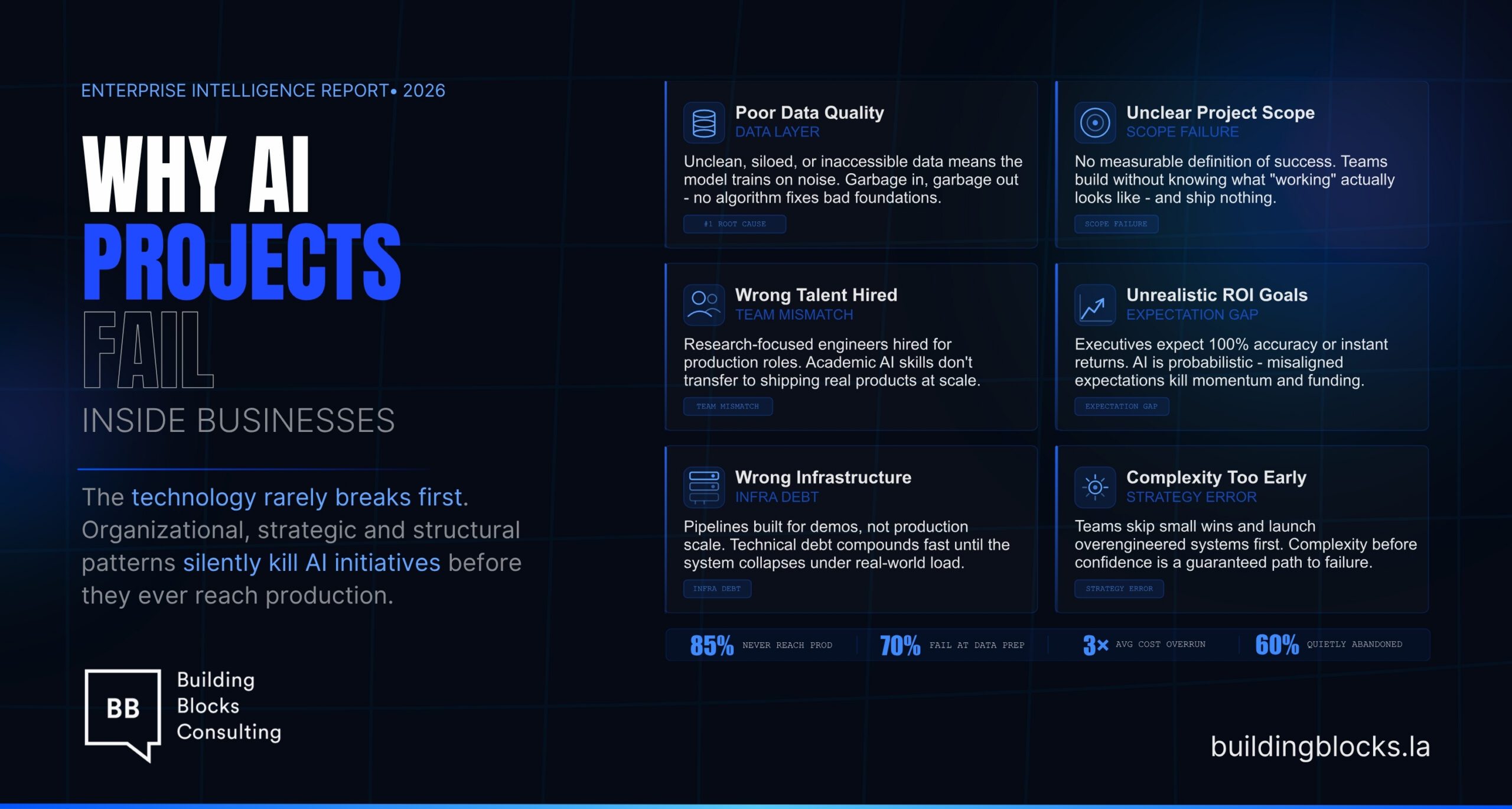
Many companies reach a point where growth slows, competition tightens, or operational complexity increases, and leadership meetings begin circling around automation, prediction, and intelligent systems until someone finally says what feels obvious: we need to hire AI developers. On the surface, it sounds logical if AI is the goal, engineers must be the answer. Yet beneath that decision often sits a quieter, less visible issue. Data is scattered across platforms, teams define the same metric in different ways, reports contradict one another, ownership is unclear, access remains manual, and quality checks are inconsistent. These gaps rarely appear in board presentations, but they directly determine whether AI efforts will succeed or stall. When companies hire AI developers without first addressing data readiness, they add pressure without removing friction. Engineers step into environments where expectations are high, but foundations are unstable, and instead of building meaningful systems, they spend time untangling inconsistencies. The outcome is not innovation but confusion. This is not a talent problem; it is a readiness problem.
When Data Foundations Become a Business Risk
Data challenges usually stay hidden while organizations are small. A few dashboards, a few spreadsheets, and a few internal systems can function through coordination and personal communication.
Growth changes that.
As customer bases expand and products multiply, data begins flowing through more systems. Marketing tools, CRM platforms, finance software, operational databases, and analytics layers each one becomes part of the ecosystem. Over time, small inconsistencies accumulate.
At first, these issues feel manageable. Teams fix discrepancies manually. Analysts reconcile reports. Leaders accept that different dashboards tell slightly different stories.
But the moment AI becomes a priority, these small inconsistencies turn into structural risk. AI systems rely on consistency. They depend on stable definitions, reliable pipelines, and traceable data lineage. If customer churn means one thing in marketing and another in finance, no model can resolve that conflict. If historical data contains gaps or duplications, predictive systems inherit that instability.
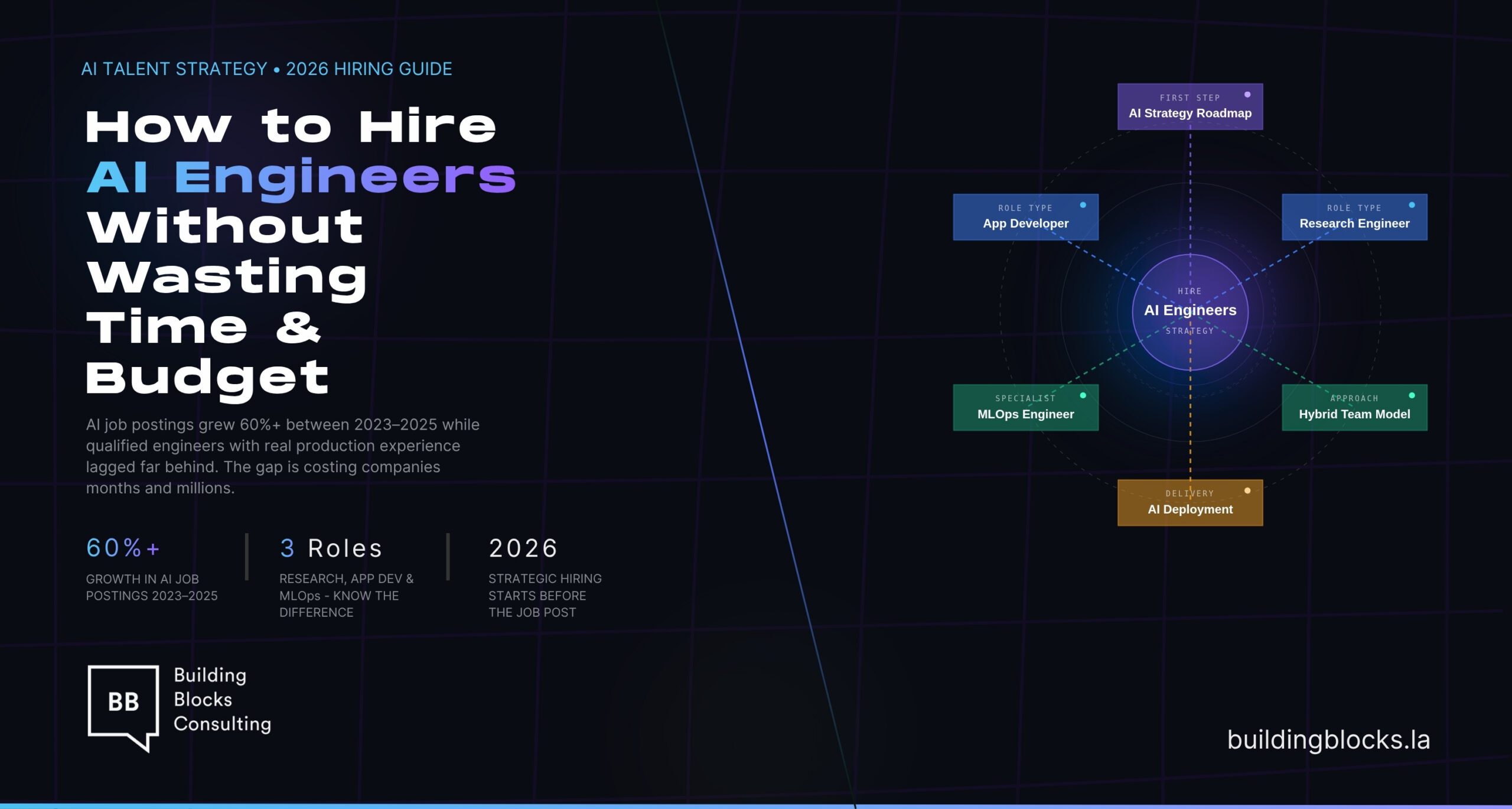
This is often when leadership decides to hire AI developers more aggressively. The assumption is that stronger technical expertise will solve complexity. In reality, engineers can only work with what exists.
Without clarity at the data layer, progress slows before it starts.
Why Companies Decide to Hire AI Developers Too Early
There is a predictable pattern in growing organizations.
First, there is curiosity. Teams experiment with dashboards and automation tools. Then comes a successful prototype, maybe a basic recommendation engine or a forecasting model built on a subset of clean data. That success builds confidence.
Soon, leadership wants scale.
At this stage, hiring feels like momentum. Bringing in AI engineers signals commitment. It reassures investors. It energizes product teams. It suggests that transformation is underway.
But scaling AI is not the same as scaling software features.
Software can often tolerate imperfect data because humans compensate for errors. AI systems cannot. They amplify whatever patterns they are given. If those patterns are inconsistent, biased, or poorly structured, the system reflects that instability.
When companies hire AI developers before clarifying governance, ownership, and infrastructure responsibilities, engineers spend most of their time diagnosing issues that predate them. Instead of building intelligent systems, they are mapping undocumented pipelines and reconciling conflicting definitions.
This disconnect creates tension. Leadership wonders why progress is slow. Engineers feel constrained. Trust erodes quietly.
What Data Readiness Actually Means for Leadership
Data readiness is not a technical checklist. It is an operational discipline.
For business leaders, it involves answering simple but uncomfortable questions:
- Who owns each critical dataset?
- How are key metrics defined across departments?
- Where does data originate, and how does it move?
- What processes ensure consistency over time?
- How are changes documented and communicated?
In many organizations, these answers are incomplete. Responsibility is shared informally. Documentation lives in conversations rather than systems. Over time, this creates dependency on individuals rather than structure.
When AI becomes a priority, that fragility is exposed.
Data readiness means building clarity before complexity. It ensures that when companies hire AI developers, those engineers enter an environment where definitions are aligned, access is controlled, and infrastructure is intentional.
Without that preparation, even strong hires cannot deliver stable outcomes.
Where Organizations Commonly Struggle
Most companies do not ignore data intentionally. They grow quickly. Systems are added in response to immediate needs. Integration is postponed. Documentation is deferred.
The most common struggles include:
- Multiple sources of truth for the same metric
- Manual processes hidden behind automated dashboards
- Inconsistent data labeling across teams.
- Unclear access permissions and governance rules
- Historical data that lacks structure or validation
Individually, these issues seem manageable. Collectively, they create friction.
AI engineers entering this environment face a dilemma. They can either slow down and rebuild foundations or attempt to build on unstable ground. Neither option satisfies leadership expectations if readiness was never discussed upfront.
Below is a simplified comparison of what typically changes when data foundations are addressed before scaling AI teams:

The difference is not technical sophistication. It is operational clarity.
The Emotional Impact Inside Growing Companies
Data readiness is often discussed as a structural issue, but it also has a human dimension.
When engineers cannot trust data, they hesitate to commit to outputs. When product managers receive conflicting forecasts, they delay decisions. When executives see inconsistent results, they question the investment.
Over time, AI becomes associated with uncertainty instead of progress.
This dynamic is rarely visible externally. From the outside, the company appears innovative. Internally, teams feel friction.
Hiring more engineers in this environment increases pressure. Expectations rise. Budgets expand. Yet foundational issues persist.
Addressing readiness early protects morale as much as capital. It creates an environment where technical teams can operate with confidence and where leadership can make decisions without second-guessing the underlying data.
How Experienced Partners Add Clarity Before You Hire AI Developers
Before expanding AI teams, leaders benefit from stepping back.
A structured readiness review examines data flow, governance policies, ownership models, and infrastructure dependencies. It identifies silent bottlenecks and misaligned definitions. It surfaces risks that would otherwise be passed on to new hires.
Organizations that engage experienced advisors, such as BuildingBlocks Consulting, often discover that their immediate need is not additional modeling expertise. It is alignment.
This alignment can include:
- Defining shared business metrics across departments
- Establishing clear data ownership
- Standardizing documentation and access policies
- Mapping system dependencies
- Clarifying long-term infrastructure strategy
Once this foundation is in place, the decision to hire AI developers becomes strategic rather than reactive. Engineers join a structured environment where expectations are realistic, and inputs are reliable.
The result is not just faster delivery. It is a steadier execution.
Infrastructure Risk Is a Leadership Issue, Not an Engineering One
When AI initiatives struggle, it is tempting to interpret the problem as technical. Perhaps the models need improvement. Perhaps the engineers need support.
In many cases, the deeper issue sits at the leadership level.
Infrastructure risk accumulates when strategic decisions about systems, ownership, and governance are postponed. It grows quietly until AI exposes it.
An AI system that produces inconsistent results is not always flawed. It may simply reflect inconsistent inputs. A model that fails to generalize may be responding to fragmented historical data.
Experienced consulting partners often help leadership see this distinction. For example, organizations that work with BuildingBlocks Consulting frequently begin with an operational assessment rather than immediate hiring expansion. The goal is to understand structural readiness before increasing technical headcount.
This reframes the conversation. Instead of asking how to accelerate hiring, leadership begins asking how to reduce risk.
That shift matters.
The Long-Term Cost of Ignoring Data Foundations
Ignoring data readiness rarely causes dramatic failure overnight. Instead, it creates slow erosion.
Projects take longer than expected. Scope expands unexpectedly. Teams revisit the same discussions repeatedly. Leadership becomes cautious about further investment.
Eventually, AI initiatives lose momentum.
The irony is that the organization may have hired excellent engineers. The talent was never the issue. The environment was. Over time, this pattern shapes culture. AI becomes viewed as experimental rather than operational. Innovation becomes siloed rather than integrated. Confidence diminishes quietly.
In contrast, companies that treat data as infrastructure, not as a byproduct,t experience a different trajectory. AI initiatives become extensions of existing systems rather than fragile experiments layered on top.
A Practical Decision Framework for Leaders
Before deciding to hire AI developers, leaders can ask a few grounding questions:
- Are our key metrics consistently defined across teams?
- Do we know where critical data originates and how it moves?
- Is data ownership formally assigned?
- Can we trace errors back to their source?
- Do engineers currently spend significant time cleaning data?
If the answers are unclear, hiring alone will not resolve the issue.
This does not mean delaying AI ambitions indefinitely. It means sequencing decisions correctly. Data clarity first. Talent expansion second.
That order reduces risk and increases return on investment.
The Strategic View: Data First, Talent Second
The decision to hire AI developers is significant because it signals a clear commitment to intelligent systems and future growth, but strong engineers inevitably amplify the environment they enter. If the data foundation is fragmented, it amplifies fragmentation; if it is structured and well governed, they accelerate meaningful progress. For business leaders, the lesson is simple: AI success rarely depends on algorithms alone, but on the discipline and clarity surrounding data. Ignoring readiness creates hidden infrastructure risks that often surface only after hiring, when expectations are already high. Addressing data foundations early does not slow innovation it stabilizes it and ensures that when you hire AI developers, they can focus on building new value rather than repairing historical inconsistencies. In the long run, organizations that treat data as a strategic asset owned, governed, and aligned are the ones where AI becomes an operational reality instead of an ongoing experiment. The difference is not technical ambition, but leadership sequencing: data first, talent second, always.



By Chris Clifford
Chris Clifford was born and raised in San Diego, CA and studied at Loyola Marymount University with a major in Entrepreneurship, International Business and Business Law. Chris founded his first venture-backed technology startup over a decade ago and has gone on to co-found, advise and angel invest in a number of venture-backed software businesses. Chris is the CSO of Building Blocks where he works with clients across various sectors to develop and refine digital and technology strategy.