



How can we help?
Let's Talk
How can we help?
Let's Talk
Focus: Onboarding Failures and Unclear Priorities When Companies Hire AI Engineers
The decision to hire AI engineers usually comes at a moment of ambition. A leadership team sees opportunity and feels pressure to improve forecasting, automate manual processes, or make smarter product decisions. Competitors are discussing machine learning initiatives, investors are asking about intelligent systems, and internal teams are stretched thin. Hiring the first AI engineer feels like decisive action. It signals seriousness about innovation. Yet in many US companies, the months that follow are surprisingly quiet. There are meetings, access requests, exploratory analysis, and internal conversations. Activity increases, but measurable progress does not. The engineer is capable and motivated. Leadership remains supportive. Still, momentum stalls. What is lost first is not the budget. It is time. And once time slips during this early phase, recovery becomes difficult.
When It Becomes Relevant to Hire AI Engineers
Most growing businesses do not begin with a structured plan to hire AI developers. The need develops gradually as operations become more complex and decision-making becomes heavier. Reporting cycles lengthen. Forecasts feel unreliable. Customer behavior becomes harder to predict. Data exists across the organization, but it lives in separate systems and is interpreted differently by each department. Marketing defines performance one way, operations another, and finance yet another. Friction builds quietly beneath the surface.
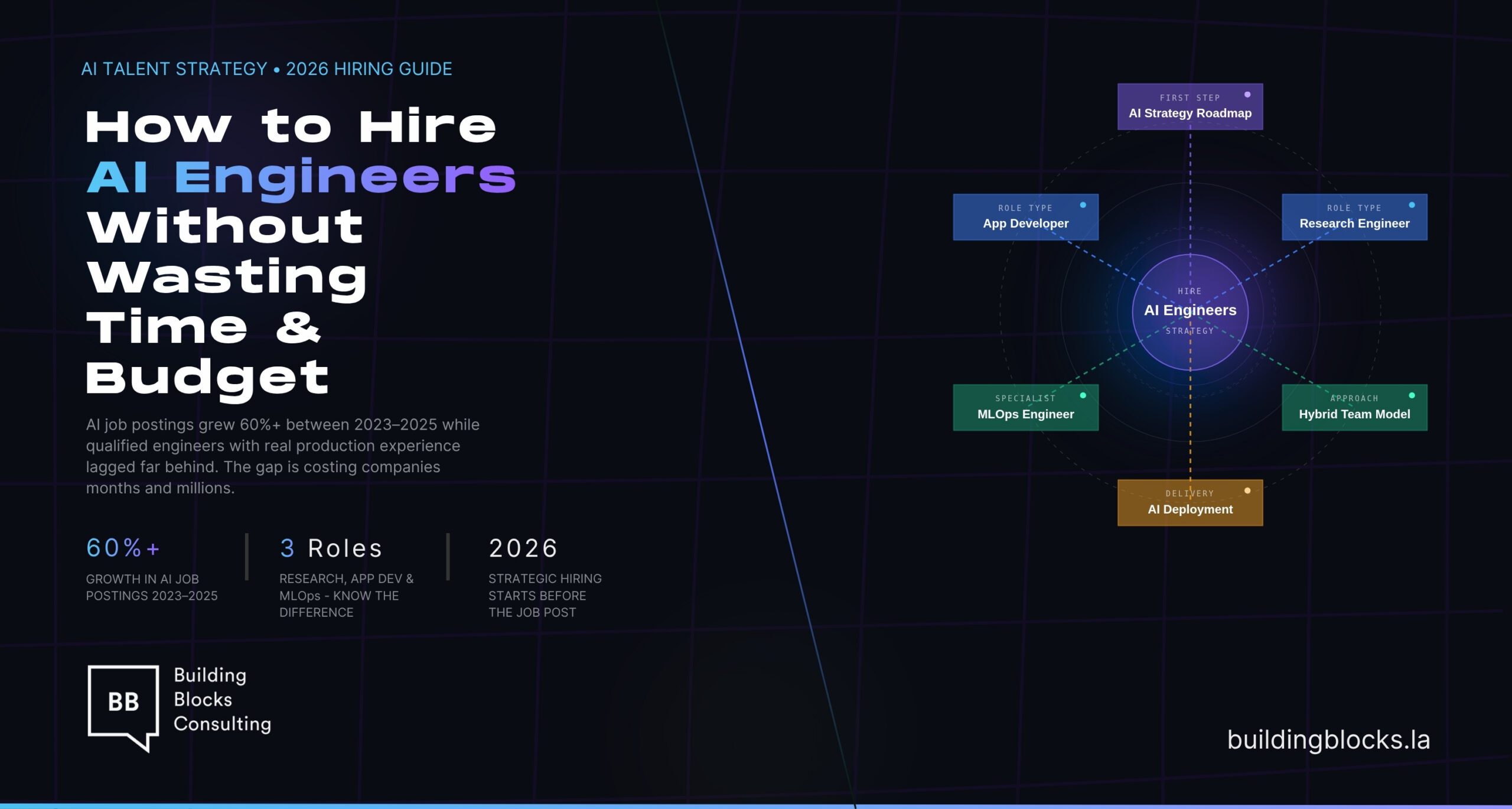
At this stage, bringing in specialized talent feels logical. The reasoning is straightforward: if we hire AI engineers, they can transform scattered data into clarity and automation. The intention is rational. However, the execution is often rushed. The true trigger is not technology but organizational strain. As companies expand, launch new offerings, or serve larger customer bases, leadership wants sharper insight and faster decisions. AI appears to offer that clarity. But if leadership has not clearly defined what clarity means or where it is needed most, hiring alone cannot resolve the tension.
The Hidden Onboarding Failure After You Hire AI Developers
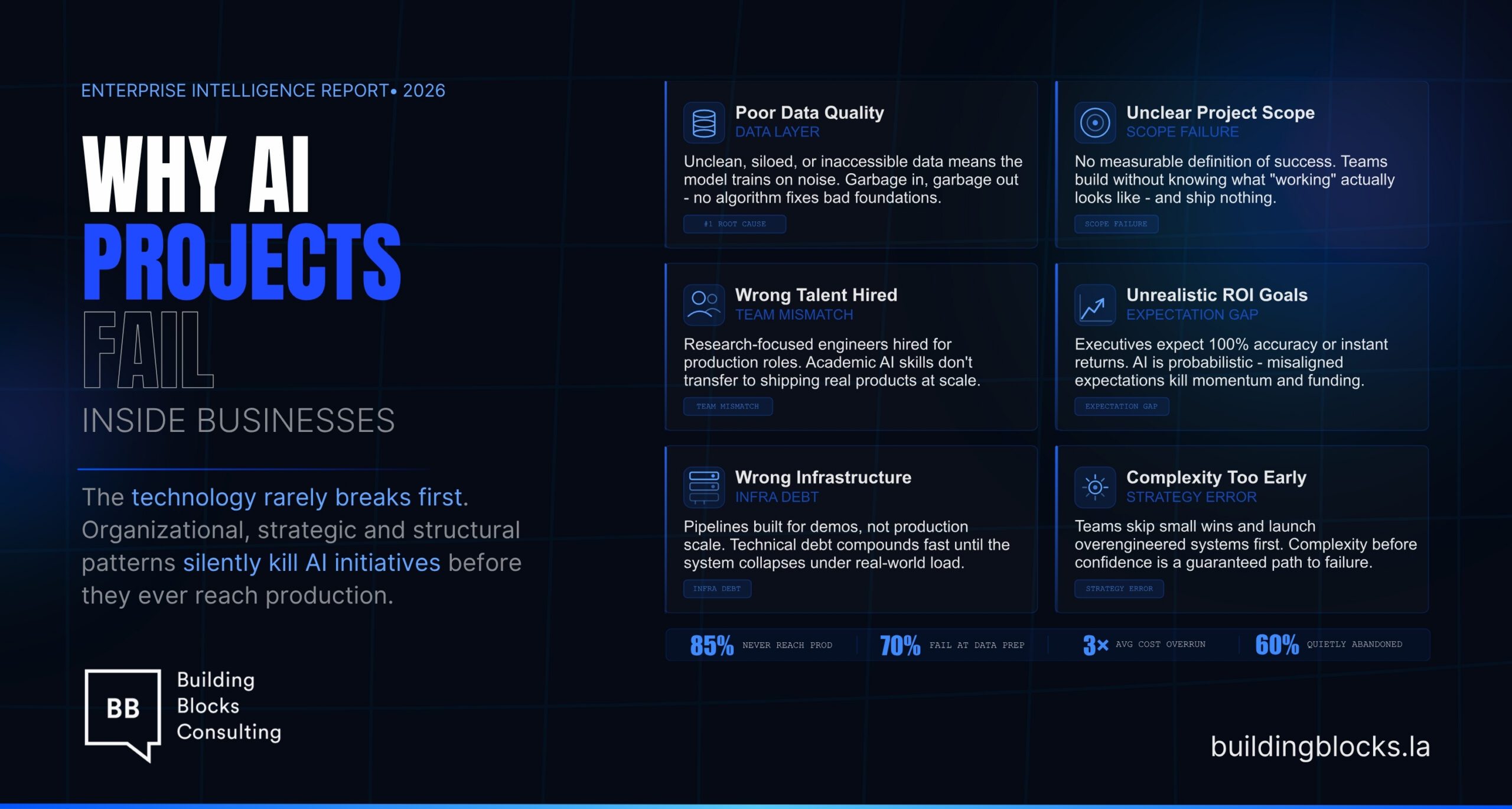
The most common failure is not technical onboarding but strategic onboarding. Companies typically provide laptops, system credentials, and access to dashboards. From an administrative perspective, onboarding seems complete. Yet strategic context is rarely formalized. When companies hire AI developers, they must be able to articulate which business problem matters most, who owns that problem, what trade-offs are acceptable, and what a meaningful first win looks like. In many organizations, those answers exist only in fragmented conversations rather than in a clear mandate.
As a result, the engineer spends the early weeks gathering context instead of building solutions. They meet with sales, operations, product, and finance teams. Each department shares important challenges. Each request sounds reasonable. None are prioritized. The engineer is left interpreting ambiguity rather than executing against a defined objective. Leadership sees calendar activity and assumes progress is underway, but clarity has not improved.
This is often when outside advisory support is considered. Firms such as BuildingBlocks Consulting are sometimes engaged not to replace internal talent but to help executive teams define scope, sequencing, and ownership before further time is lost. Their value lies in aligning leadership around a focused initiative so the AI hire operates within a clear boundary. Without that alignment, even a strong engineer becomes a reactive problem-solver instead of a strategic contributor.
Where Companies Commonly Lose Months
Time rarely disappears because of dramatic failure. It disappears through small misalignments repeated over weeks. An engineer explores multiple ideas because no single initiative has executive protection. Data requests stall because ownership was never clarified. Success criteria evolve mid-project because stakeholders did not agree on what “done” meant at the outset. The AI hire may report to multiple leaders, each with competing priorities, leaving no one fully accountable for protecting focus. Early prototypes remain internal experiments because no clear path to production was defined.

The contrast is not about talent. It is about readiness. In one environment, the engineer works hard but diffuses effort. In the other, the organization creates guardrails that compound progress. Companies often assume that once they hire AI engineers, momentum will build naturally. In reality, momentum requires constraint. It requires leadership to protect priorities and deliberately say no to distractions.
Unclear Priorities Create Silent Frustration
Around the second or third month, tension often begins to surface. Different leaders request updates and propose new initiatives. Sales wants predictive insights. Marketing asks for personalization models. Operations seeks automation. Each request is reasonable, especially after the company has made the investment to hire AI developers. But without a defined priority framework, the engineer becomes a shared resource rather than a focused investment.
From leadership’s perspective, progress feels slower than expected. From the engineer’s perspective, direction feels inconsistent. Neither side is acting irrationally. They are operating without a shared roadmap. Over time, this dynamic creates quiet frustration. Executives begin questioning whether the hire was premature. Engineers question whether their work will ever move beyond experimentation.
At this stage, experienced consulting partners may facilitate executive alignment sessions to narrow competing initiatives into a phased execution plan. BuildingBlocks Consulting, for example, has supported growing firms by helping leadership define what will be built first, what will wait, and who owns the outcome. This process does not involve rewriting code. It involves clarifying responsibility and protecting focus. Once alignment is restored, progress often accelerates naturally.
Why Leadership Structure Matters More Than Technical Skill
It is tempting to believe that hiring a more senior engineer would solve the problem or that adding more technical capacity would create leverage. However, the first hire establishes the pattern. If leadership cannot articulate a clear objective, additional engineers multiply complexity rather than reduce it. More talent introduces more ideas, more dependencies, and more coordination needs. Execution discipline must precede expansion.
Before companies hire AI engineers, they should be able to describe the operational bottleneck they intend to address, the data sources involved, the executive sponsor accountable for the initiative, and the realistic timeline for phased delivery. These are leadership questions, not technical ones. When they are answered, engineers move with clarity and confidence. When they are not, even skilled professionals struggle to create a measurable impact.
The Emotional Cost of Lost Time
There is also a human dimension that often goes unnoticed. The first AI hire usually joins with optimism and ambition. They expect to build meaningful systems and contribute strategically. When early months are defined by unclear direction and shifting expectations, motivation erodes gradually. At the same time, executives feel pressure from boards or investors to demonstrate visible progress. Each month without a tangible outcome increases internal anxiety.
This mutual pressure can lead to reactive decisions. Projects are rushed. Priorities shift abruptly. The engineer is asked to accelerate without a clearer scope. Ironically, attempts to move faster often extend timelines further. Companies that avoid this pattern treat the first hire as part of a broader operational shift. They invest time in defining governance, ownership, and sequencing before demanding rapid results. They understand that hiring AI developers introduces a new decision-making capability, not just new technical output.
From Hiring to Execution: What Changes Outcomes
Organizations that gain traction share a common trait: preparation. Before the offer letter is signed, they define a primary use case, assign an accountable executive sponsor, clarify data access pathways, and set phased expectations. They resist treating the engineer as a universal solution to every inefficiency. Instead, they tie the hire to a specific business objective with a protected scope.
When structure precedes hiring, speed follows. When hiring precedes structure, alignment must be built later, often at the cost of valuable time.
Conclusion: Hiring AI Engineers Is a Leadership Test
When US companies choose to hire AI engineers, they believe they are investing in intelligence and innovation. In practice, they are testing their own clarity and discipline. The first hire exposes whether priorities are aligned, whether ownership is defined, and whether leadership can protect focus under pressure. Companies do not lose months because they hire AI developers. They lose months because they expect technical talent to compensate for strategic ambiguity. The organizations that move forward fastest are not those with the most advanced tools. They are the ones that treat hiring as the beginning of disciplined execution, not a substitute for it.




By Chris Clifford
Chris Clifford was born and raised in San Diego, CA and studied at Loyola Marymount University with a major in Entrepreneurship, International Business and Business Law. Chris founded his first venture-backed technology startup over a decade ago and has gone on to co-found, advise and angel invest in a number of venture-backed software businesses. Chris is the CSO of Building Blocks where he works with clients across various sectors to develop and refine digital and technology strategy.