



How can we help?
Let's Talk
How can we help?
Let's Talk
Building an MVP Is a Business Decision, Not Just a Technical One
When a new product idea takes shape, most leaders face the same question:
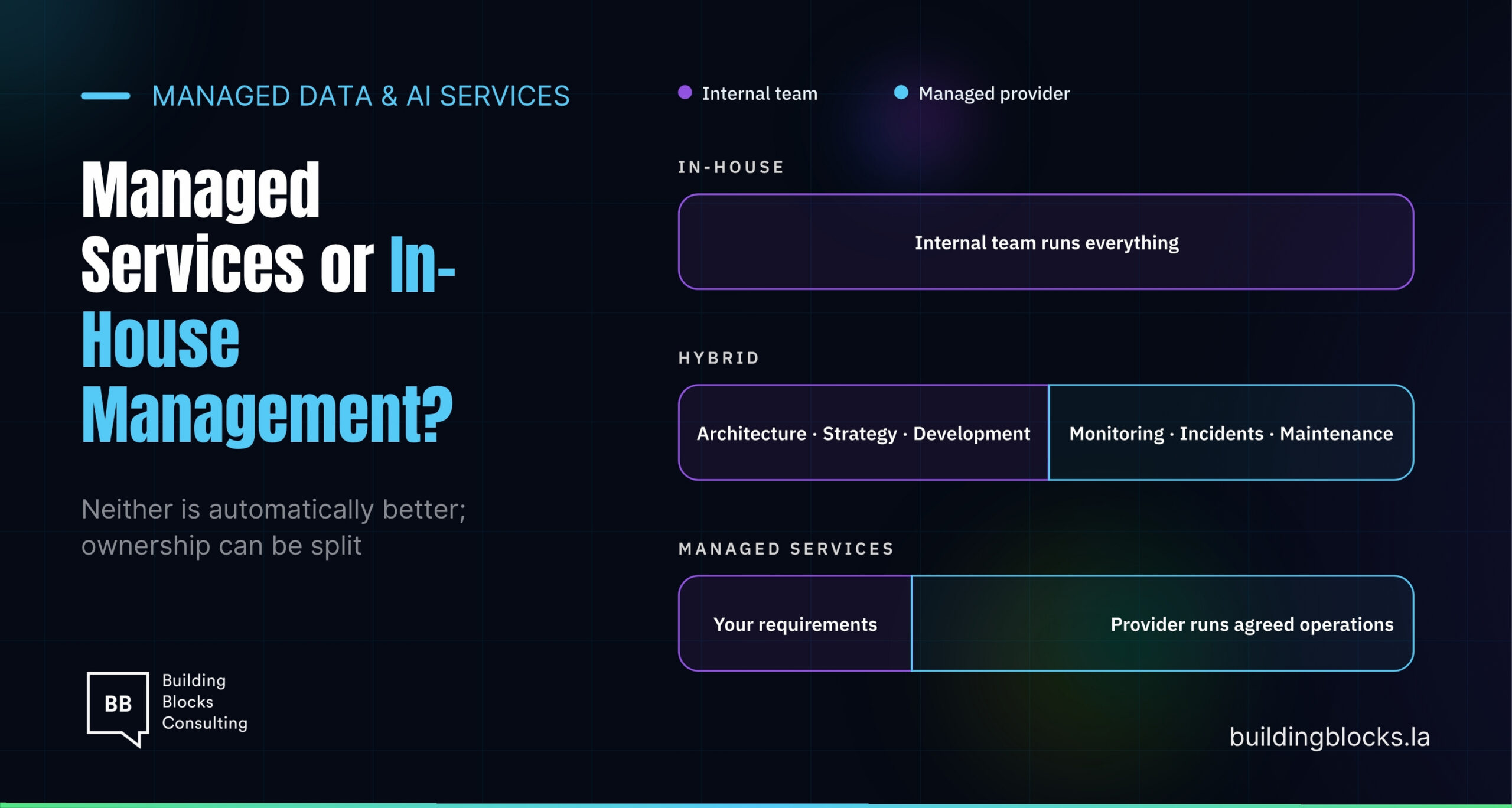
Should we partner with an MVP development company or build the product with an internal team?
This decision has very little to do with code quality and everything to do with speed, risk, cost, and long-term ownership.
Both approaches can work. The right choice depends on your company’s stage, internal capabilities, and how critical speed-to-market is for your product.
This article breaks down the real differences to help business leaders make an informed decision.
What Working With an MVP Development Company Looks Like
An MVP development company provides a ready-to-deploy product team that typically includes product managers, designers, and engineers experienced in early-stage builds.
Companies usually choose this route when they want to:
- Launch quickly without long hiring cycles
- Validate ideas before heavy investment
- Reduce early-stage execution risk
- Access proven MVP delivery processes
Instead of starting from zero, you’re leveraging a team that has already built and launched multiple MVPs.
What Building an MVP With an Internal Product Team Involves
An internal product team means recruiting and managing product managers, designers, and developers in-house.
This approach makes sense when:
- Product development is a long-term core capability
- Continuous iteration is required
- Deep domain knowledge is critical
- Full ownership is a priority
However, assembling an effective internal team takes time, especially when MVP speed matters.
Speed to Market

If speed is critical, an MVP development company often provides a clear advantage.
Cost and Budget Predictability

For early validation, predictable costs often matter more than long-term optimization.
Control and Ownership

Strong MVP development companies emphasize transparency and knowledge transfer to reduce dependency.
Risk and Reliability

Experience with early-stage products reduces common MVP pitfalls.
Scalability and Flexibility

Many companies use an MVP development company as a temporary accelerator, not a permanent replacement.
When an MVP Development Company Makes Sense
Partnering with an MVP development company is often the right choice when:
- You need to move fast
- The idea is unproven
- Internal teams lack MVP experience
- You want to minimize early risk
- Budget predictability matters
This is especially common for startups, innovation teams, and new product initiatives.
When Internal Product Teams Are the Better Option
An internal team is usually the better choice when:
- Product development is central to long-term strategy
- Continuous improvement is required
- Data and IP sensitivity are high
- You have time to invest in hiring
Some organizations start with an MVP development company and gradually transition ownership in-house.
Conclusion: Choose the Model That Fits Your Stage
There is no universally “better” option.
An MVP development company excels at speed, structure, and early validation. Internal product teams excel at long-term ownership and deep integration.
Many successful companies use both, starting with an MVP development company to reduce risk and accelerate learning, then building internal teams once the product proves its value.
The best decision is the one that supports execution today without limiting growth tomorrow.



By Chris Clifford
Chris Clifford was born and raised in San Diego, CA and studied at Loyola Marymount University with a major in Entrepreneurship, International Business and Business Law. Chris founded his first venture-backed technology startup over a decade ago and has gone on to co-found, advise and angel invest in a number of venture-backed software businesses. Chris is the CSO of Building Blocks where he works with clients across various sectors to develop and refine digital and technology strategy.