


How can we help?
Let's Talk
How can we help?
Let's Talk
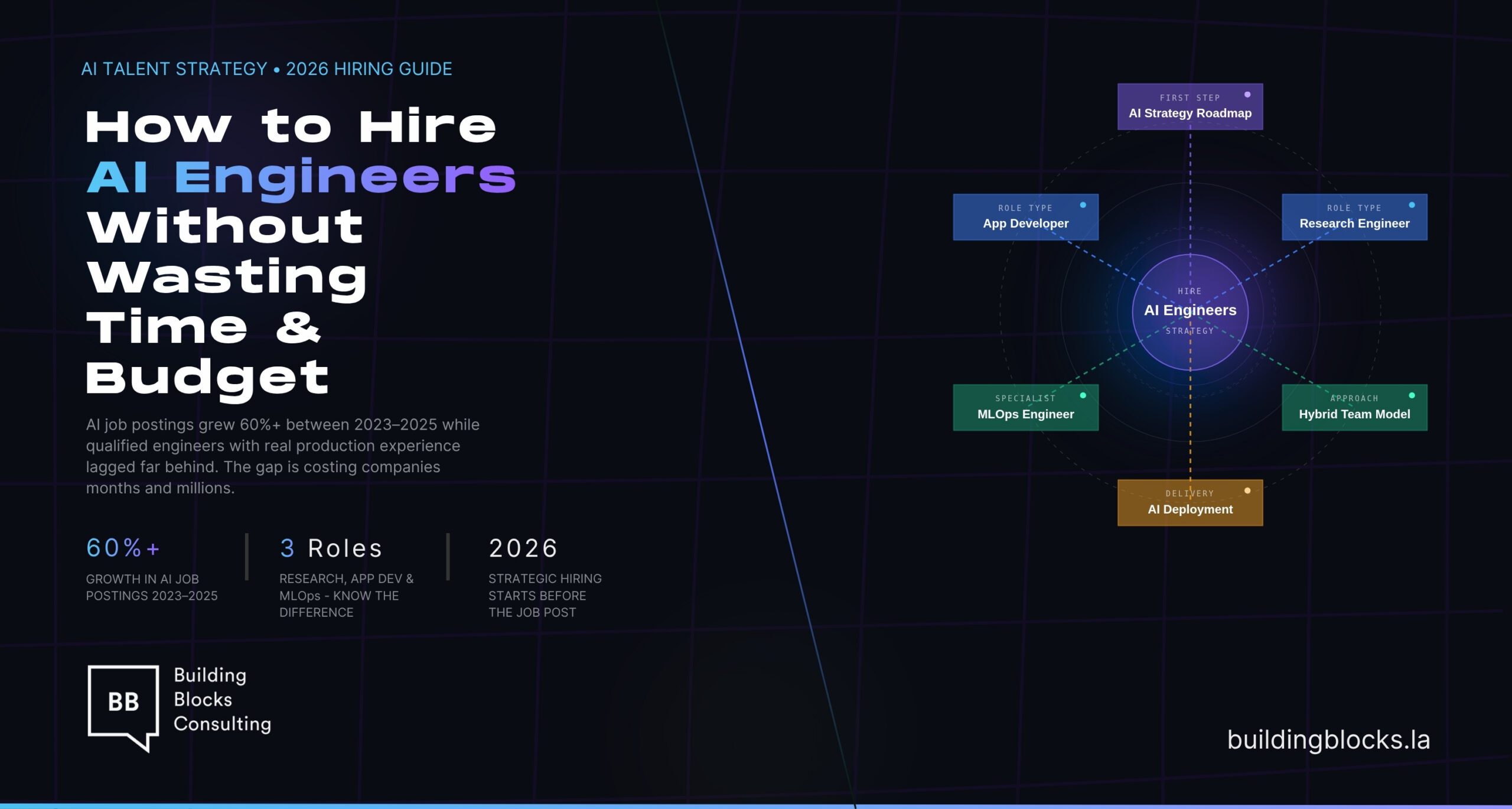
Hiring AI engineers is now a priority for many U.S. companies. The challenge isn’t finding resumes or tools; it’s turning AI initiatives into stable, production-ready systems that actually hold up over time.
In most cases, problems don’t come from a lack of talent. They come from misaligned expectations. Building AI for production is very different from running experiments, and many hiring decisions don’t account for that difference.
Below are some of the most common mistakes U.S. companies make when they hire AI engineers and why these mistakes often surface later as delays, rework, or system instability.
Mistake 1: Treating AI Roles Like Traditional Software Positions
AI engineering comes with a level of uncertainty that standard application development does not. Models behave differently once exposed to real users, real data, and real edge cases.
When companies evaluate AI engineers only on coding ability or academic credentials, they often miss the most important skill: the ability to work through ambiguity. Strong AI engineers know how to manage imperfect data, evolving requirements, and unexpected outcomes, not just write clean code.
What Often Goes Wrong

Mistake 2: Hiring for Proofs of Concept Instead of Production
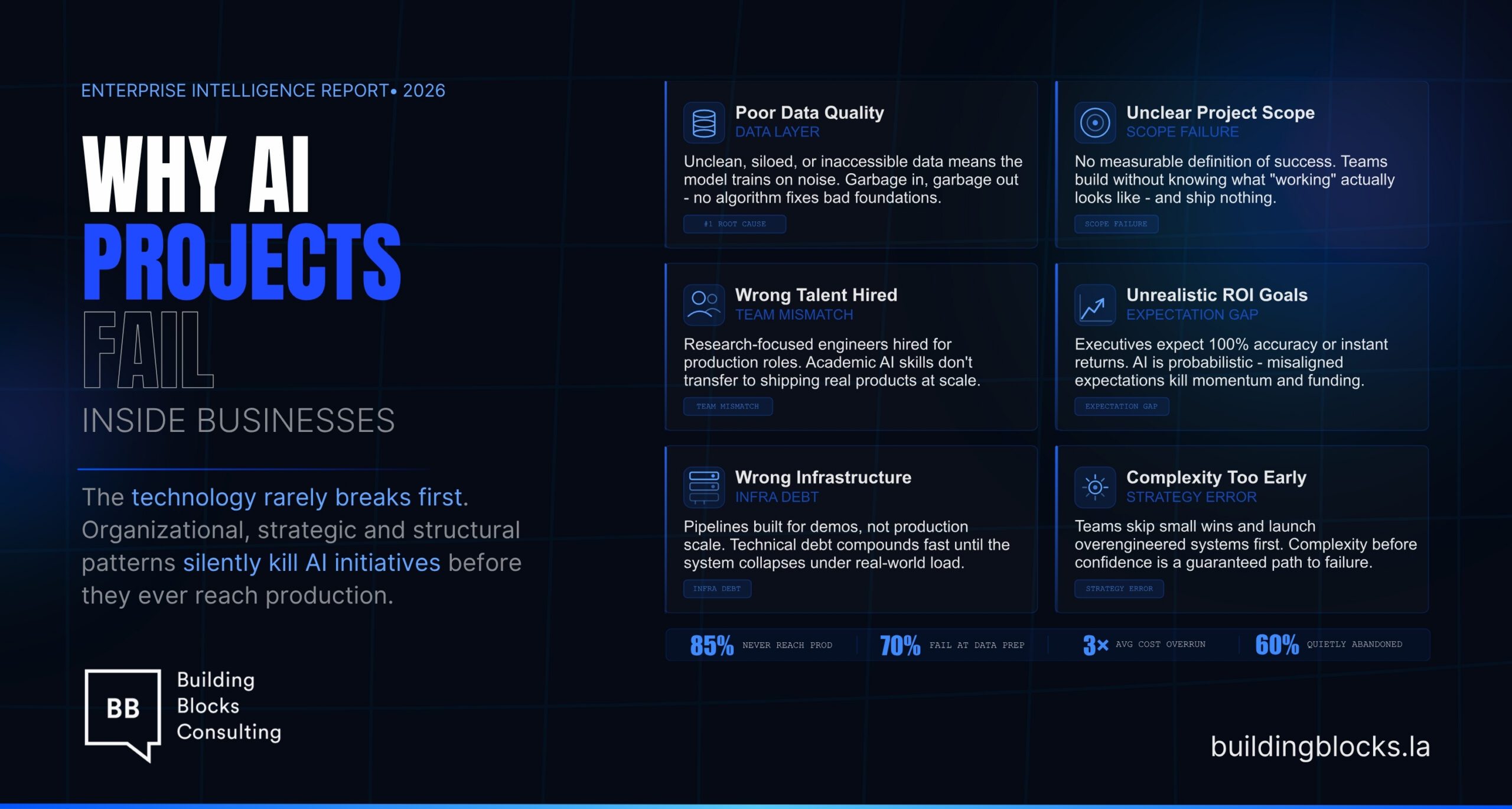
Many AI engineers are excellent at building demos and prototypes. That skill is valuable, but it’s not enough for production systems.
A model that works in a controlled environment still needs monitoring, retraining, version control, and performance tuning once deployed. Without experience in these areas, AI systems can quickly become unreliable or costly to maintain.
If production readiness isn’t discussed upfront, teams often discover the gap too late.
Mistake 3: Underestimating Data and Infrastructure Complexity
The “AI part” is rarely the hardest.
In production systems, most of the work happens around data pipelines, integrations, deployment, and infrastructure. U.S. companies that hire AI engineers without evaluating these skills often end up with fragile solutions that don’t scale well.
Good AI engineers think in terms of systems, not just models
What Strong AI Engineers Usually Handle

Mistake 4: Expecting One Engineer to Do Everything
It’s common to see job descriptions asking one AI engineer to handle data science, ML engineering, deployment, monitoring, and even product decisions.
This may work briefly in early-stage teams, but it doesn’t scale. Without clear boundaries and support, even experienced engineers struggle to deliver consistently.
Clear scope leads to better focus, healthier teams, and more predictable outcomes.
Mistake 5: Overlooking Communication and Business Alignment
AI engineers don’t work in isolation. They collaborate with product managers, leadership, and sometimes legal or compliance teams.
When companies hire AI engineers based solely on technical skill, communication gaps often appear. Decisions go unexplained, risks surface late, and expectations drift.
Production AI requires engineers who can explain trade-offs clearly and align technical decisions with business goals.
Mistake 6: Prioritizing Short-Term Cost Over Long-Term Stability
Choosing the lowest-cost option can feel efficient, especially under pressure to move fast. But AI systems require ongoing care.
Poor early hiring decisions often lead to rewrites, delayed launches, and performance issues that cost far more than the initial savings.
U.S. companies that hire AI engineers with long-term ownership in mind usually see more stable systems and fewer surprises.
Mistake 7: Not Defining What “Success” Means
Many teams hire AI engineers without clearly defining what success looks like.
Is it model accuracy? System reliability? Business impact? User experience?
Without clear metrics, engineers are forced to make assumptions. This often leads to frustration on both sides and outcomes that don’t align with business needs.
Clear Goals Reduce Risk

How U.S. Companies Can Hire AI Engineers with Less Risk
Companies that succeed with AI tend to approach hiring thoughtfully. They look beyond resumes and evaluate production experience, system-level thinking, and long-term ownership.
When you hire AI engineers with the full lifecycle in mind, from data and deployment to monitoring and maintenance, you significantly reduce risk and improve long-term outcomes.


By Chris Clifford
Chris Clifford was born and raised in San Diego, CA and studied at Loyola Marymount University with a major in Entrepreneurship, International Business and Business Law. Chris founded his first venture-backed technology startup over a decade ago and has gone on to co-found, advise and angel invest in a number of venture-backed software businesses. Chris is the CSO of Building Blocks where he works with clients across various sectors to develop and refine digital and technology strategy.