


How can we help?
Let's Talk
How can we help?
Let's Talk
In today’s market, almost every company is trying to “add AI.”
The assumption is straightforward:
If a product includes AI, it becomes more competitive.
But that assumption is also where most projects begin to fail.
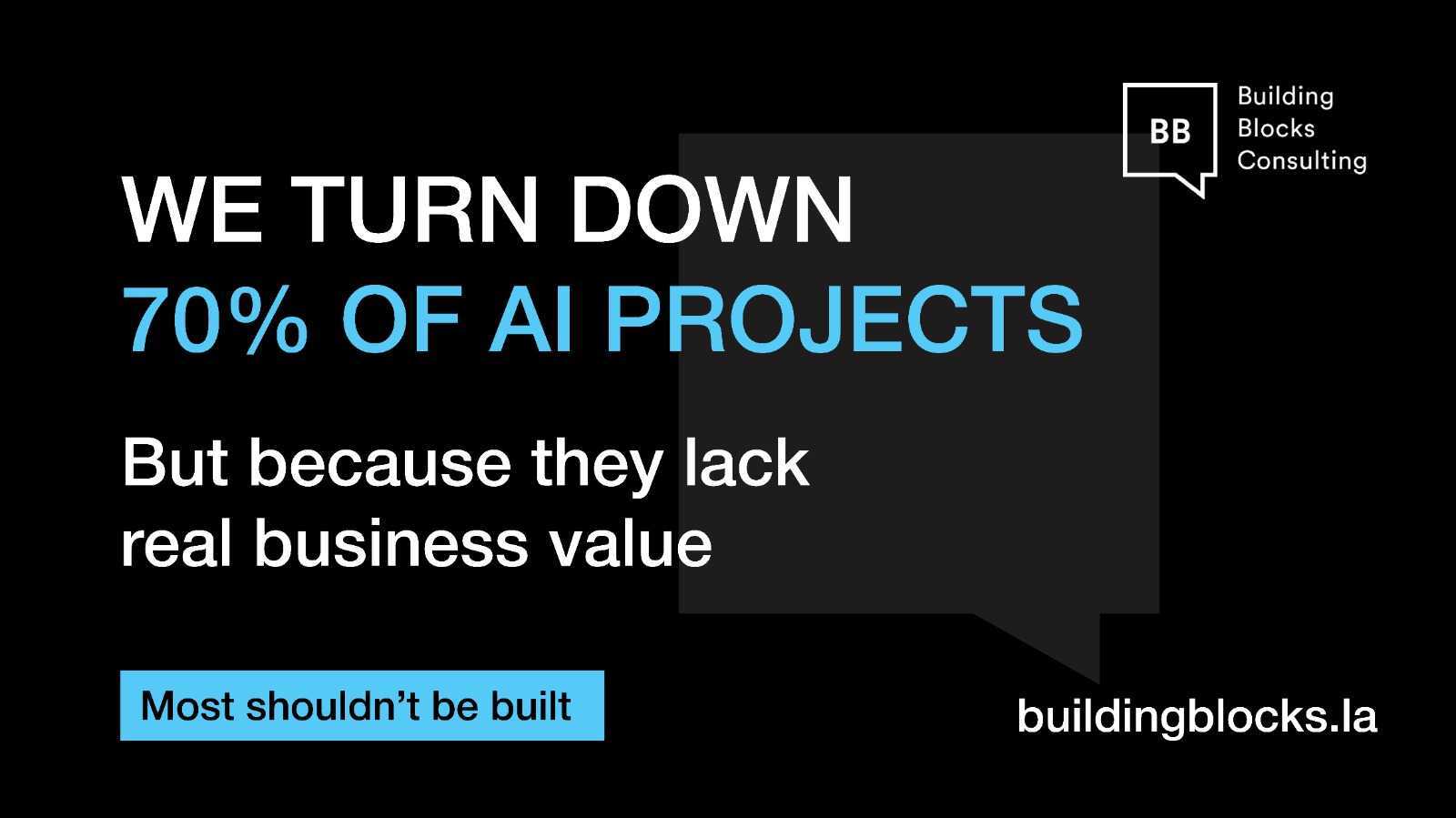
As an AI development company, we turn down nearly 70% of the opportunities we receive. Not because we lack the capability, but because many of these ideas are not ready to deliver real business value.
The Real Problem Behind the AI Rush
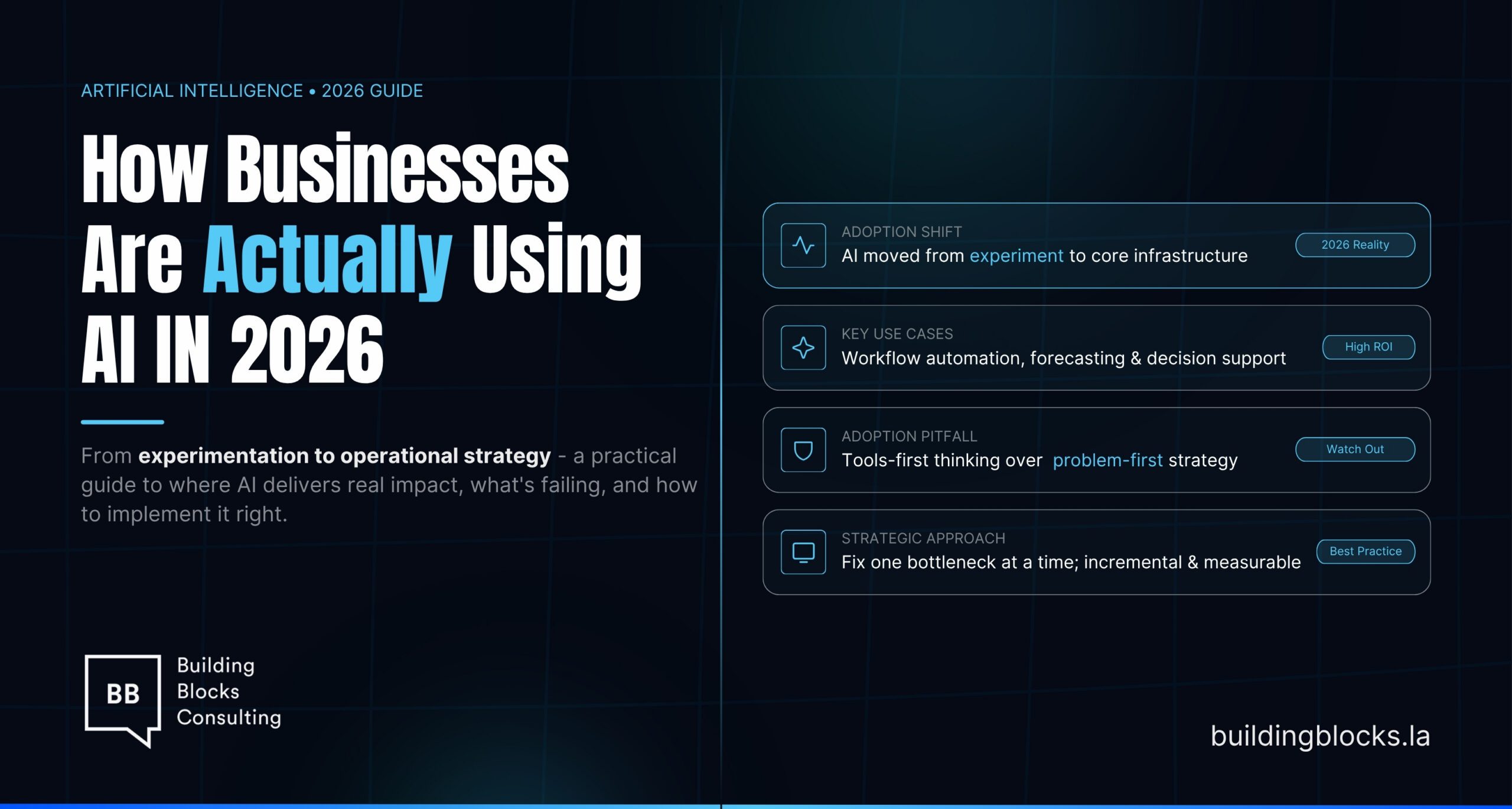
The current wave of AI adoption has created a gold rush mindset.
Companies want chatbots, recommendation engines, and AI-powered features often without clearly defining the problem they are solving.
AI does not create value on its own. It amplifies what already exists.
If the underlying system, data, or workflow is weak, adding AI does not fix it. It exposes it.
We’ve seen teams spend months building AI features that perform well in demos but fail in real-world usage not because the technology didn’t work, but because the foundation wasn’t ready.
AI Is an Enabler, Not the Product
One of the most common misconceptions is treating AI as the product itself.
It isn’t.
Users don’t seek AI. They seek outcomes:
- Faster decisions
- Better recommendations
- Reduced manual effort
- Clearer insights
If AI doesn’t directly improve these outcomes, it becomes an unnecessary layer of complexity rather than a competitive advantage.
Why Most AI Projects Fail Before They Start
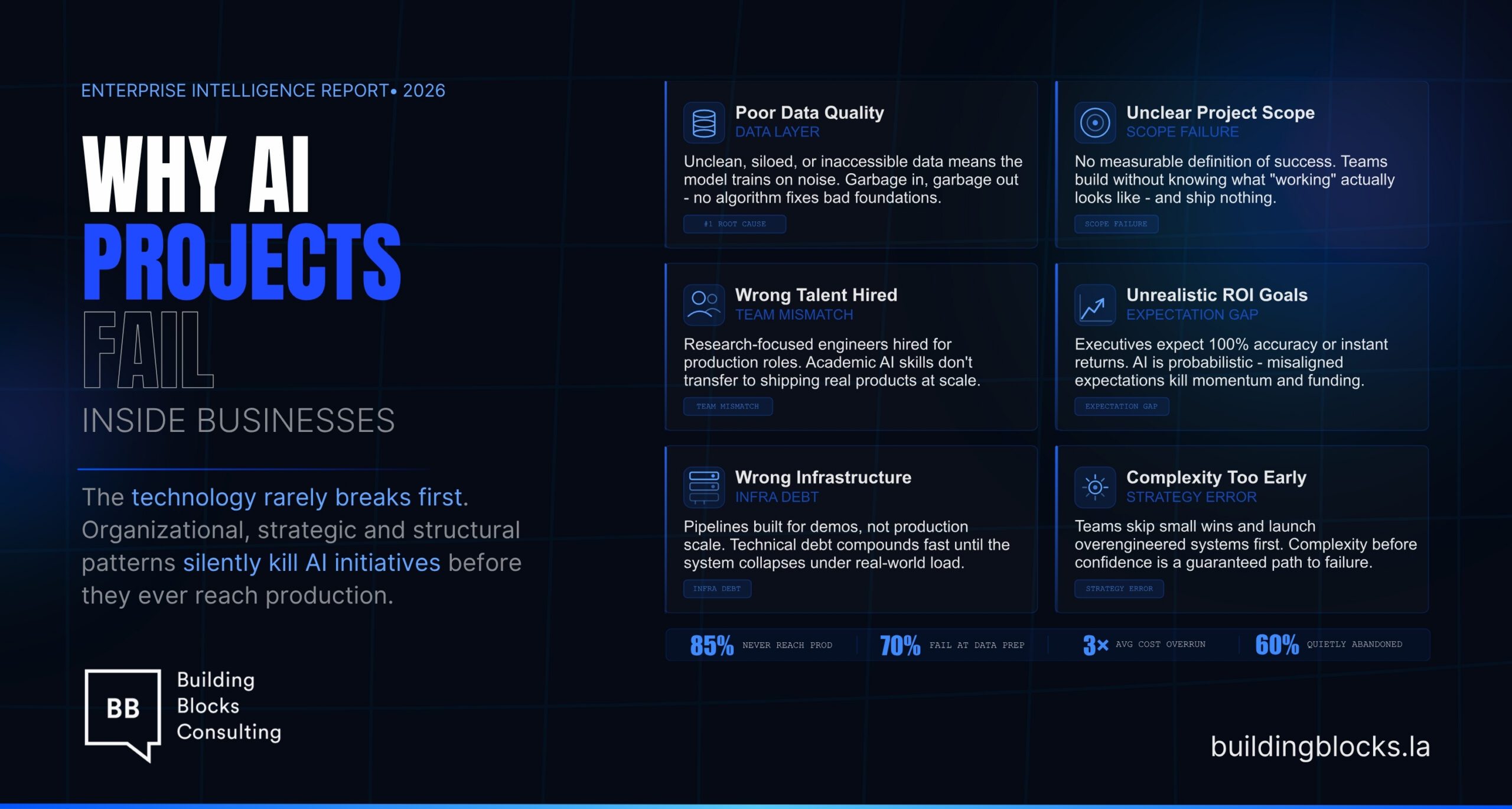
From our experience, unsuccessful AI projects tend to follow predictable patterns.
Lack of a clearly defined problem
When the starting point is “Can we use AI here?”, the project is already misaligned. Without a clear problem statement, even the best models won’t deliver meaningful results.
Decisions driven by hype
Pressure from competitors and investors often leads to rushed adoption. This results in reactive development instead of strategic thinking and features that don’t move the business forward.
Weak data foundations
AI systems depend on structured, reliable data. Without it, outputs become inconsistent and difficult to trust.
In many cases, the real work isn’t building the model it’s fixing the data layer.
No path beyond MVP
Some ideas work in a prototype but fail when scaled.
If there is no plan for how the system evolves after the first version, the product cannot sustain real usage.
Misaligned expectations
AI is powerful, but it is not a shortcut.
Expecting it to replace entire workflows instantly or deliver results in unrealistic timelines often leads to disappointment.
What We Look for Before Saying Yes
Turning down projects allows us to focus on the ones that have a real chance of success.
We look for:
- A clearly defined problem
- A measurable business outcome
- A system that can scale
- Teams that understand trade-offs
When these elements are in place, AI becomes a multiplier not just a feature, but a meaningful advantage.
The Cost of Building the Wrong AI Solution
The biggest cost of a failed AI project is not financial.
It’s lost time.
- Time spent building the wrong thing.
- Time spent debugging avoidable issues.
- Time spent starting over.
We’ve seen companies invest months into AI features that never reach production only to restart with a clearer approach later.
Saying yes to the wrong project often means saying no to the right opportunity.
A Different Approach to AI Development
We don’t approach AI as just a technical layer.
We approach it as a business decision.
That means asking the right questions early, challenging assumptions, and sometimes advising against AI when it’s not the right fit.
Our goal is not to build more AI systems.
It’s to build the right ones systems that work in real-world conditions, scale effectively, and deliver measurable impact.
The Bottom Line
AI is no longer the bottleneck.
Tools are accessible. Models are improving. Implementation is faster than ever.
The real differentiator today is judgment.
- What to build.
- What to avoid.
- And how to align technology with business outcomes.
Turning down 70% of projects is not a limitation. It’s a filter. And it’s the reason the remaining work actually creates impact.




By Chris Clifford
Chris Clifford was born and raised in San Diego, CA and studied at Loyola Marymount University with a major in Entrepreneurship, International Business and Business Law. Chris founded his first venture-backed technology startup over a decade ago and has gone on to co-found, advise and angel invest in a number of venture-backed software businesses. Chris is the CSO of Building Blocks where he works with clients across various sectors to develop and refine digital and technology strategy.